
Hair Colour
What Is a Bleach Bath for Hair? When Salons Use It & Risks
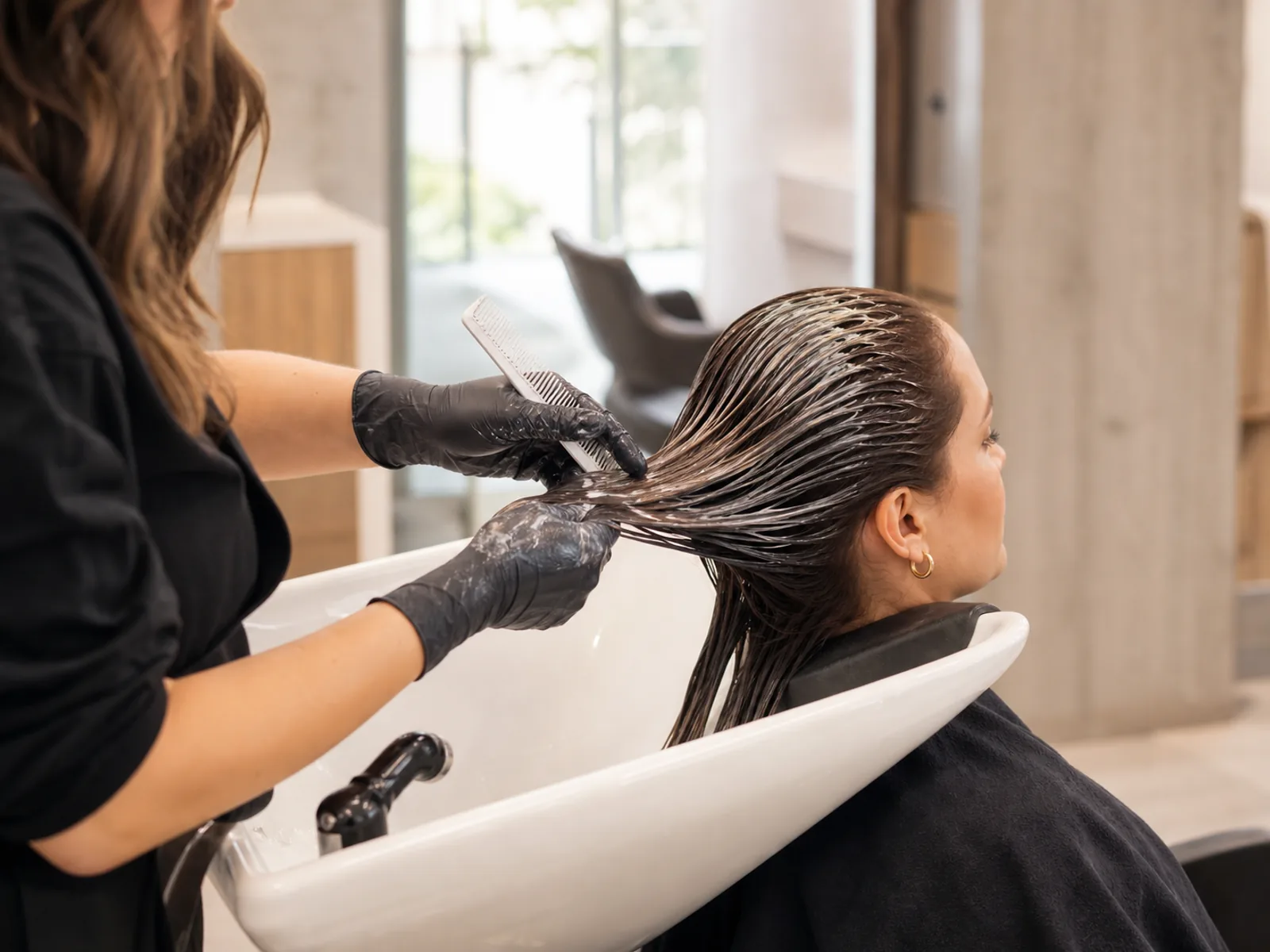
A bleach bath — also called a bleach wash or soap cap — is a mixture of professional lightener (bleach powder), developer, and shampoo. It is applied to wet hair and processed for a short time under a stylist’s supervision. The combination dilutes the active lightener, producing a gentler lift than a traditional full-strength bleach application.
Salons use bleach baths primarily for colour correction rather than dramatic lightening. This guide explains when a hairdressing bleach bath may be recommended and what risks to consider.
Why Would a Salon Use a Bleach Bath?
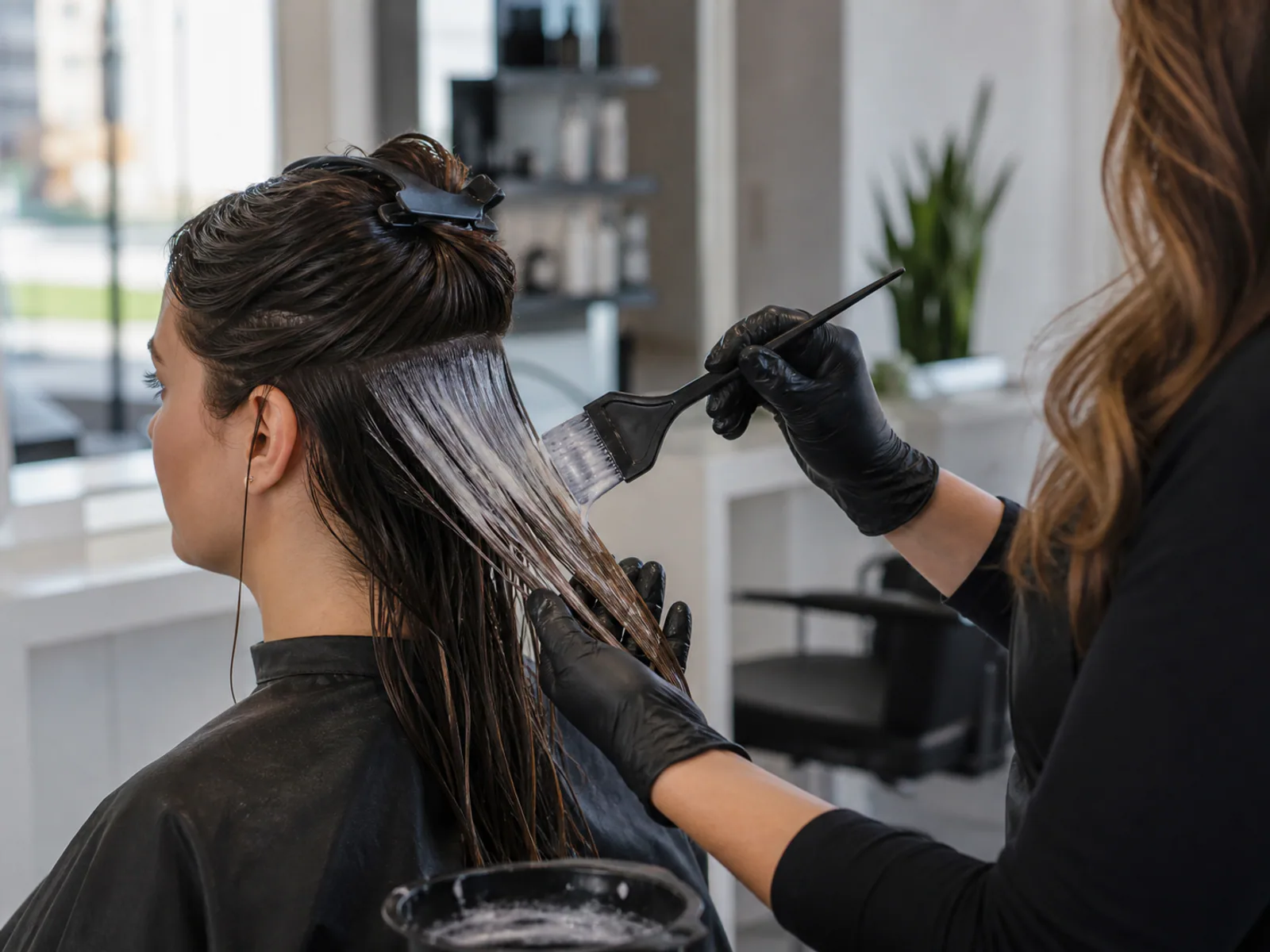
Because the lightener is diluted with shampoo and applied to wet hair, its action is slowed and easier to monitor. A stylist may recommend a bleach bath when the goal is:
- Reducing artificial colour buildup — Repeated dye applications can create layers of unwanted pigment. A bleach bath can help lift some of that buildup without the intensity of full-strength lightener.
- Gentle, controlled lightening — Most bleach baths lift roughly one to two levels, making them useful when only a slight shift is needed.
- Fixing colour banding — Uneven colour from previous services can sometimes be blended out with a carefully applied bleach wash.
- Preparing for another colour service — A colourist may use a bleach bath to create a more even canvas before applying a new shade.
If you are considering a professional hair colour service that involves correcting or adjusting an existing shade, your stylist may discuss whether a bleach bath is appropriate during the consultation.
Bleach Bath vs. Regular Bleaching
The core difference is concentration and application. Both use the same type of lightener and work through oxidation, but a bleach bath dilutes the formula and applies it to wet hair.
| Feature | Bleach Bath | Full-Strength Lightener |
|---|---|---|
| Formula | Lightener + developer + shampoo | Lightener + developer |
| Application | Applied to wet hair | Applied to dry hair |
| Lift potential | Usually 1–2 levels | Can achieve 7–9 levels |
| Processing speed | Slower and more diffuse | Faster and more concentrated |
| Primary use | Colour correction, removing buildup | Significant lightening, highlights, balayage |
| Control | Easier to spread evenly | Requires precise sectioning |
A bleach bath is not a substitute for a full lightening service when significant lift is the goal. Stylists who perform balayage or highlights typically use full-strength lightener because the technique requires targeted, higher-level lift.
Bleach Bath vs. Colour Remover
These two services are not interchangeable, even though both can reduce unwanted colour.
A colour remover (sometimes called a colour stripper) works by shrinking artificial dye molecules so they can be rinsed away. It specifically targets artificial pigment and, when used correctly, should not affect natural melanin.
A bleach bath works through oxidation. It lightens whatever pigment it encounters — both artificial and natural. If applied over virgin (uncoloured) sections of hair, a bleach bath will lighten natural hair colour.
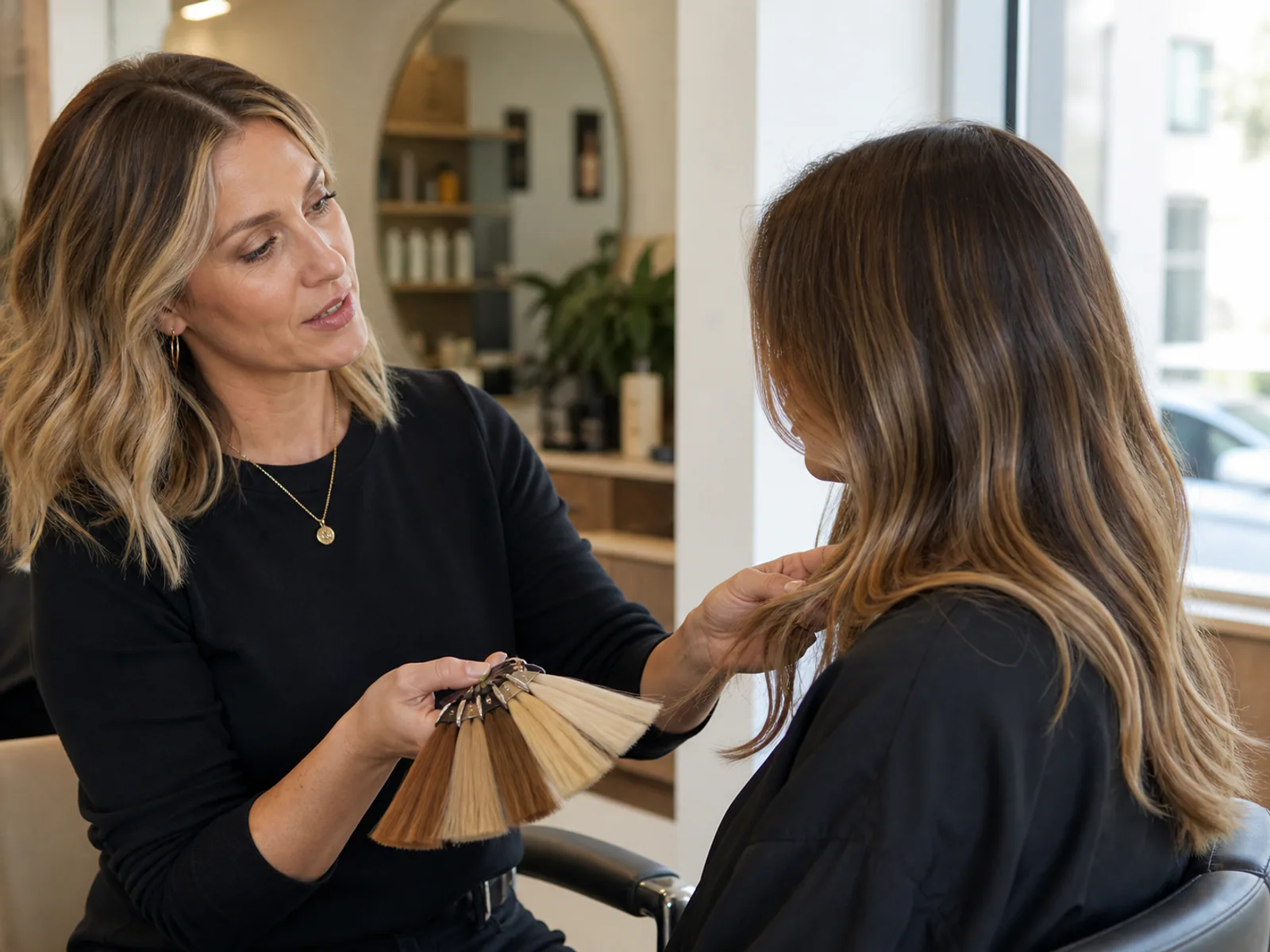
This is an important distinction your stylist will consider during a colour correction consultation. The choice between a colour remover and a bleach bath depends on the type of dye used, how many layers have been applied, the current condition of the hair, and the target result.
Can a Bleach Bath Remove Hair Dye?
A bleach bath can lift some artificial colour, but it has limitations.
- It is generally more effective on semi-permanent and demi-permanent dyes than on permanent colour that has been applied many times.
- Results can be uneven, especially if different parts of the hair have different colour histories.
- Very dark or heavily layered artificial colour may not shift significantly with a single bleach bath.
A consultation with a colourist is the best starting point. The stylist can assess what type of dye is present, how many layers exist, and whether a bleach bath, colour remover, or a different approach makes the most sense.
Is a Bleach Bath Less Damaging Than Bleach?
A bleach bath is often described as “gentler” than a full-strength bleach application — and in terms of concentration, that is accurate. The diluted formula and shorter processing time generally mean less chemical exposure per session.
However, a bleach bath still uses bleach. The lightener still opens the hair cuticle through oxidation, and there is still a real risk of damage. It is not a damage-free service.
The degree of risk depends on factors such as:
- Current hair condition — hair that is already dry, porous, or chemically processed is more vulnerable.
- Number of sessions — multiple bleach baths over a short period compound the stress on the hair.
- Processing time — leaving a bleach bath on too long increases the chance of cuticle damage.
- Professional judgment — an experienced colourist monitors processing carefully and adjusts timing based on what the hair is doing.
Describing a bleach bath as “safe” or “harmless” would be misleading. It is a chemical service with real consequences if misapplied.
Who May Not Be a Good Candidate?
Not everyone is suited for a bleach bath. A stylist may advise against it if the client has:
- Severely compromised hair — hair that is already breaking, excessively dry, or elastic when stretched.
- Highly porous hair — porous hair absorbs chemicals unevenly, increasing the risk of patchy results or further damage.
- Multiple recent chemical processes — hair that has been recently permed, relaxed, or heavily coloured may not tolerate additional chemical exposure.
- Scalp concerns — irritation, open wounds, or sensitivity may make any lightening service inappropriate until the scalp has recovered.
A professional assessment before the service is essential. The stylist will evaluate strand condition, elasticity, and porosity before deciding whether to proceed.
What Happens During a Professional Appointment?
During a salon bleach bath appointment, you can generally expect:
- Consultation — The colourist discusses your goals and checks the hair and scalp.
- Preparation — The hair is dampened and the professional formula is prepared.
- Application — The diluted formula is worked through the wet hair for even distribution.
- Monitoring — The stylist checks lift and condition throughout processing.
- Rinsing and neutralising — Once the desired result is reached or the maximum safe processing time is up, the formula is rinsed out thoroughly.
- Toning (if needed) — A toner may be applied afterward to adjust the final shade and neutralise any unwanted warmth.
- Conditioning — A professional conditioning or bond-repair treatment is often applied to support the hair after the chemical process.
This is a professional service. Specific formulations, ratios, and timing decisions should be left to a trained colourist.
Aftercare
After a bleach bath, your stylist will likely recommend:
- Using a gentle, sulfate-free shampoo to avoid stripping moisture from hair that has just been chemically processed.
- Applying a deep conditioning treatment or bond-repair product regularly. Your salon may offer professional deep conditioning treatments that support recovery between appointments.
- Limiting heat styling in the days following the service, as chemically processed hair is more susceptible to heat damage.
- Avoiding additional chemical services for a period of time to let the hair recover.
- Returning for a follow-up consultation before any further colour work.
Your stylist’s aftercare guidance should take priority over general advice, as recommendations will be tailored to your specific hair condition and the products used.
Frequently Asked Questions
How many levels does a bleach bath lift?
A bleach bath typically lifts one to two levels. The exact result depends on the formula strength, processing time, and the starting condition of the hair. It is not designed for dramatic lightening.
Is a bleach bath applied to wet or dry hair?
A bleach bath is applied to wet hair. The moisture helps the diluted formula spread more evenly and slows the chemical reaction, giving the stylist more control.
Can you do a bleach bath on dark hair?
A bleach bath can be used on dark hair, but the lift will be modest — usually one to two levels. The result on very dark hair may expose underlying warm pigment (orange or red tones) rather than achieving a light blonde. A toner can help manage the warmth.
How long does a bleach bath take?
There is no universal processing time. It depends on the professional formula, starting colour, hair condition, and target result. The stylist monitors the hair throughout and rinses when the target lift is reached or the hair has processed as far as is appropriate.
Can I do a bleach bath at home?
This article does not provide at-home bleach bath instructions. Bleach baths involve professional lightener and developer, and incorrect application can cause serious hair damage or scalp irritation. A qualified colourist can assess your hair’s condition and apply the formula safely.
Will a bleach bath fix my orange hair?
A bleach bath may help reduce unwanted warm tones, but it is not guaranteed. The result depends on whether the orange comes from artificial dye or exposed natural pigment. A consultation with a colourist is the safest way to determine the right approach.
Is a bleach bath the same as a soap cap?
Yes. “Bleach bath,” “bleach wash,” and “soap cap” are different names for essentially the same technique: professional lightener mixed with developer and shampoo, applied to wet hair for a gentler lift. Terminology varies between salons and colourists.
How much does a bleach bath cost in Canada?
Pricing varies by salon, city, and the complexity of the colour correction work. A bleach bath is often part of a broader colour correction appointment rather than a standalone service. Ask about pricing during your consultation.
Find a Colourist in Canada
If you are considering a bleach bath or any colour correction service, a consultation with a qualified colourist is the best starting point. You can browse salons across Canada to compare services and availability. Check individual salon profiles to confirm whether they offer colour correction before booking.
Need a salon after reading?
Use the directory, local pages, and service hubs to compare salons in Canada with more confidence.