
Hair Care
Best Blowout Tips for Humid Canadian Summers
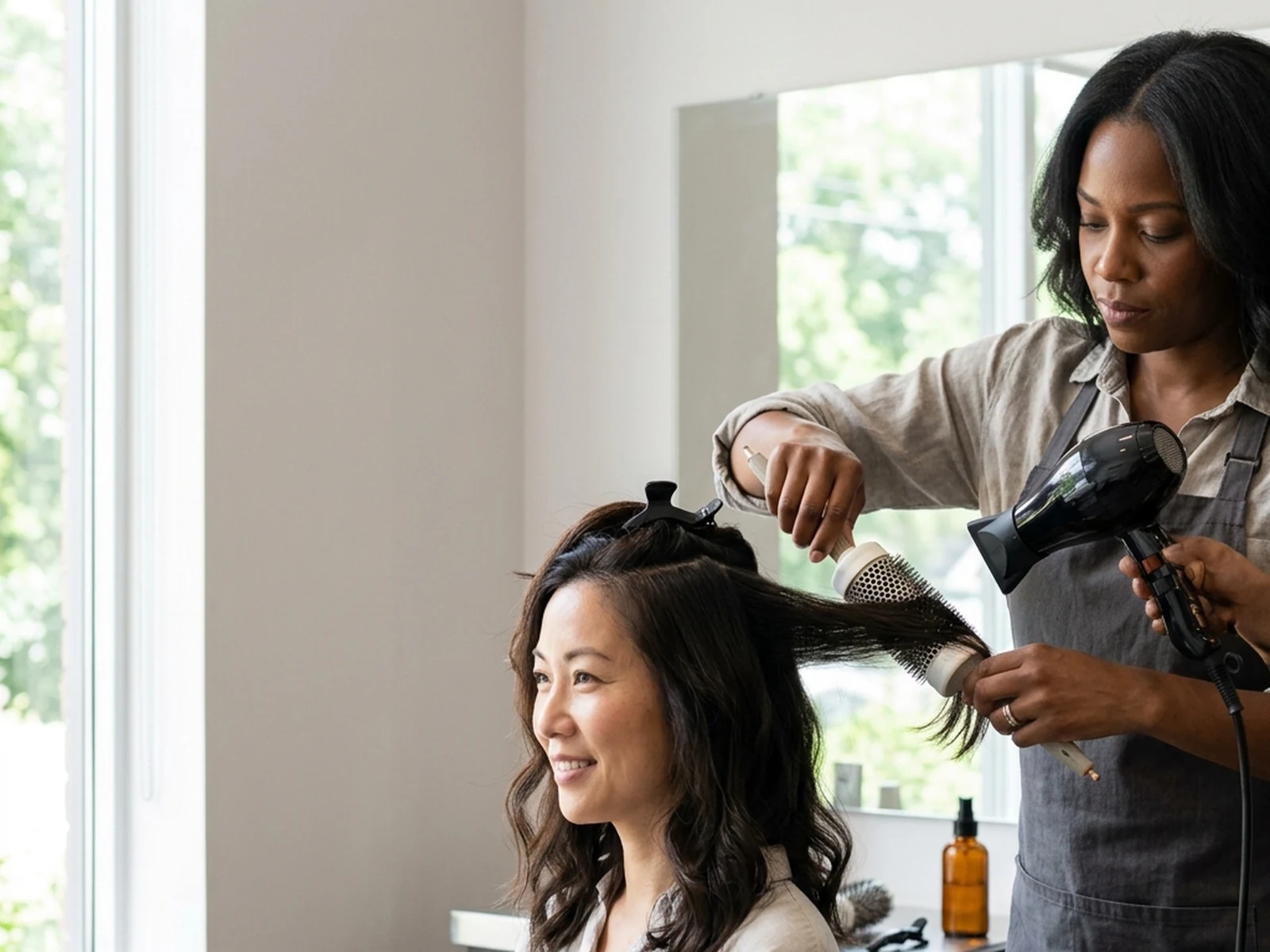
A salon blowout can look fresh and polished for several days — unless humidity gets in the way. In humid parts of Canada, especially Southern Ontario, the Lower Mainland, and Atlantic cities like Halifax, summer moisture in the air can cause a blowout to lose its shape within hours. The good news is that the right preparation, the right finishing products, and a few practical habits can make a noticeable difference.
Why humidity shortens blowout life
A blowout works by using heat and tension to temporarily reshape the hair’s hydrogen bonds. When humid air surrounds the hair, moisture breaks those bonds again and the hair reverts toward its natural texture. This is why naturally curly or wavy hair loses a blowout faster than straight hair in the same conditions.
The degree of humidity matters. A moderately warm day in Calgary will not challenge a blowout the way a July afternoon in Toronto or Halifax will. Understanding your local conditions helps you set realistic expectations.
Salon preparation that makes a difference
How the stylist prepares and dries the hair affects longevity more than most clients realise:
Fully dried roots. The most common reason a blowout falls quickly is roots that were not dried completely. Even slightly damp roots revert faster when they meet humid air. A good stylist will dry the root area first and thoroughly before shaping the mid-lengths and ends.
Lightweight product layering. Overloading the hair with heavy creams or oils before blow drying can weigh the style down and make it look limp in humidity. A light heat protectant followed by a volumising spray at the roots usually provides better structure.
Cool shot to set. Finishing each section with the dryer’s cool setting helps lock in the shape. Heat opens the cuticle; cool air closes it.
Anti-humidity product types
Not all anti-humidity products work the same way. Choosing the right format depends on your hair texture and how much hold you want:
| Product type | How it works | Best for |
|---|---|---|
| Anti-humidity spray | Creates a light barrier on the hair surface to repel moisture | Fine to medium hair that needs hold without weight |
| Smoothing serum | Coats the cuticle with a thin layer of silicone or oil to prevent moisture absorption | Thicker hair or hair prone to frizz at the ends |
| Light hold hairspray | Provides flexible hold that resists humidity without stiffness | Any hair type, applied as a finishing step |
| Leave-in conditioner | Adds internal moisture so the hair is less likely to absorb external humidity | Dry or damaged hair that frizzes because it is thirsty |
A single anti-humidity finisher is usually enough. Layering multiple humidity-fighting products can create buildup that makes the hair feel crunchy or heavy.
Protecting a blowout between outings
Once the blowout is done, small habits can extend its life:
- Keep hands out of the hair. Touching the hair transfers oils and disturbs the shape. This is the simplest tip and the hardest to follow.
- Sleep with protection. Wrapping the hair loosely in a silk or satin scarf, or sleeping on a silk pillowcase, reduces friction overnight. Some clients loosely pin the hair on top of their head.
- Avoid steam and moisture. Cooking over a pot of boiling water, long steamy showers, and outdoor rain exposure all introduce moisture. Keep the hair out of steam when possible.
- Use dry shampoo at the roots. A light application of dry shampoo on the second or third day absorbs oil without requiring a restyle. Apply before the hair looks oily, not after.
- Tie the hair loosely when exercising. If you can avoid washing, a loose bun or braid during light activity is better than a tight ponytail that leaves creases.
When humidity keeps winning
If you live in a humid region and find that blowouts rarely last more than a day, it may be worth discussing alternatives with your stylist:
- A keratin treatment can reduce frizz and improve blowout longevity for several months, though it requires specific aftercare.
- A better haircut shape — especially one that removes excess weight and allows the hair to sit naturally — can make blowouts smoother and longer-lasting.
- Adjusting expectations may be the most practical step. In very humid conditions, a second-day style that looks intentionally textured or waved rather than freshly blown out can still look polished.
For a broader look at smoothing options, see the smooth hair guide.
Frequently asked questions
How long should a blowout last in humid weather?
In moderate humidity, a well-done blowout typically lasts two to three days with good overnight protection and minimal touching. In high humidity (common in Southern Ontario and Atlantic Canada during July and August), expect one to two days of the smooth finish, with gradual texture return after that.
Can I do anything the morning after to refresh a blowout?
Yes. A quick pass with a large round brush and a blow dryer on medium heat can revive the shape around the face and crown without redoing the entire style. A light application of anti-humidity spray after refreshing helps maintain the result.
Is a silk pillowcase really worth it for blowouts?
Silk or satin pillowcases create significantly less friction than cotton, which is the main cause of overnight frizz and shape loss. Many clients find that switching pillowcases is the single most effective overnight change.
Frequently asked questions
What services do salons in Canada usually offer?
Many Canadian salons offer haircutting, hair colour, balayage, blowouts, scalp care, nail services, waxing, brow and lash treatments, facials, and bridal beauty services. Individual profiles show exactly which services each salon provides.
Need a salon after reading?
Use the directory, local pages, and service hubs to compare salons in Canada with more confidence.