
Nails
How Long Does a Pedicure Take? Classic, Gel & Spa Times
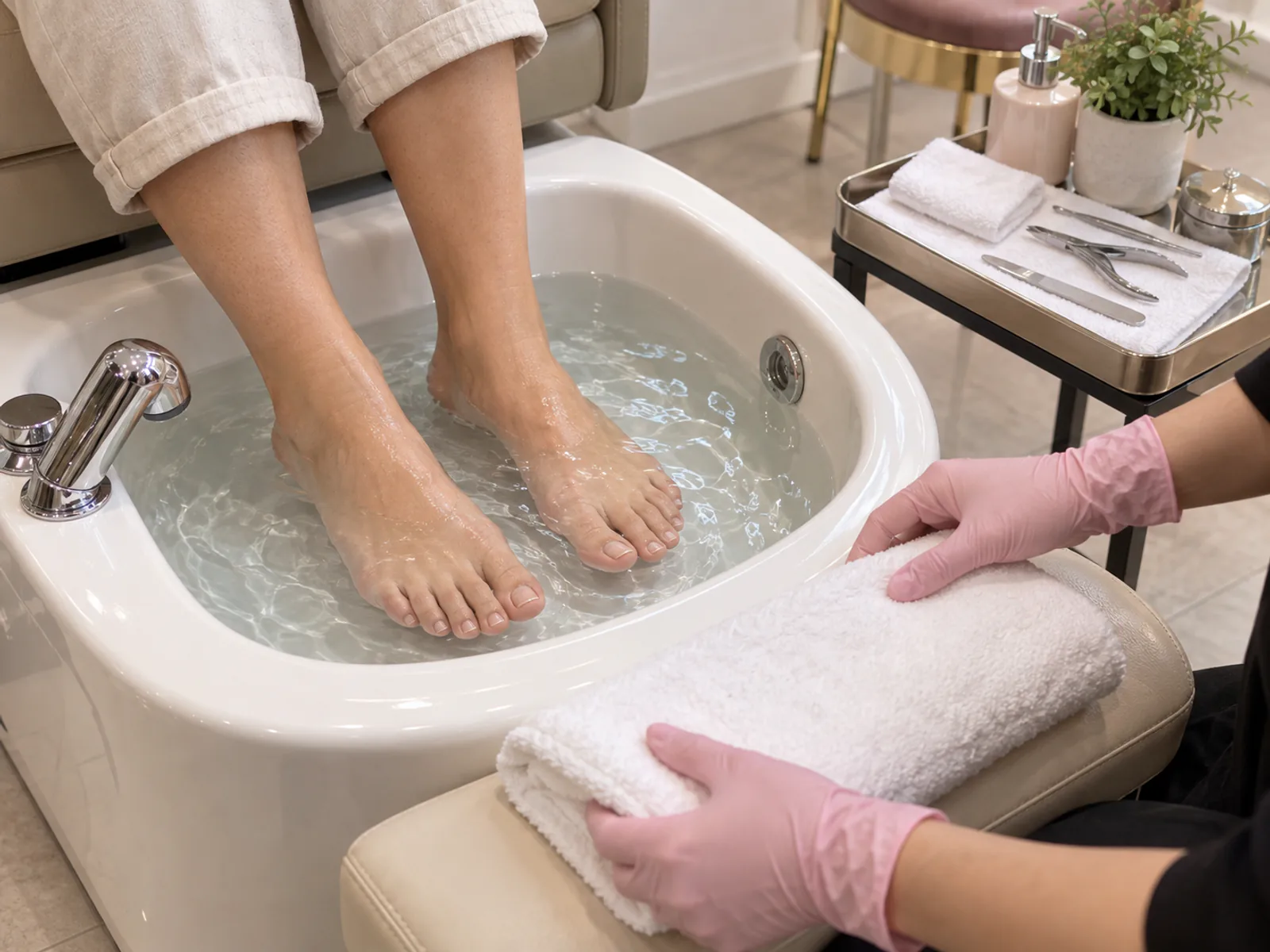
A classic pedicure commonly occupies 30 to 60 minutes on a salon schedule. A spa or luxury service may take 60 to 90 minutes, while a straightforward gel pedicure is often booked for roughly 45 to 75 minutes. These are planning ranges, not industry-wide standards: the salon’s menu and booked time are the reliable answer for your appointment.
If you choose regular lacquer, add drying time after the service. Polish can feel dry at the surface while the layers underneath are still vulnerable to pressure from socks and closed-toe shoes.
Quick appointment-time guide
| Service | Useful planning range | Why the time varies |
|---|---|---|
| Classic / basic pedicure | 30–60 minutes | Soak, nail shaping, cuticle work, light exfoliation, massage, and polish vary by menu |
| Spa / luxury pedicure | 60–90 minutes | May add a longer massage, scrub, mask, paraffin, or hot towels |
| Gel pedicure | 45–75 minutes | Includes product-specific base, colour, top-coat, and lamp-curing steps |
“Classic,” “spa,” and “luxury” are marketing labels, not standardized packages. One salon may call a 45-minute service a spa pedicure, while another reserves 90 minutes. Read the inclusions or call if your schedule is tight.
What adds time?
- Existing product removal: Soak-off gel, hard gel, or dip removal can require a separate booking block. A salon may add 15 to 30 minutes, but the product and removal method matter.
- Callus care: More extensive smoothing takes longer than a light maintenance service. A salon should not rush or use unsafe removal just to meet a short slot.
- Detailed cuticle or nail work: Damaged polish, uneven length, or problem areas may need extra care.
- Nail art: A simple accent and a hand-painted design have very different timing.
- Add-ons: Paraffin, masks, hot stones, and extended massage add steps.
- Consultation or accessibility needs: A first visit, a sensitivity discussion, or extra positioning time can lengthen the appointment.
Tell the salon about existing gel or dip product when booking. Showing up with an unmentioned removal can force the technician to shorten another part of the service or reschedule the finish.
Regular-polish drying: surface feel is not shoe readiness
There is no universal lacquer clock. Formula, coat thickness, number of layers, room conditions, and quick-dry products all change the result.
| Stage | What you can reasonably infer | What you should not assume |
|---|---|---|
| Surface feels dry | Light contact may no longer feel tacky | The lower layers are fully hardened |
| Less vulnerable to a light bump | A quick-dry system may reduce obvious smudging | Socks or shoe pressure cannot dent the polish |
| Ready for closed shoes | Depends on the complete polish system and shoe fit | One fixed waiting period works for every brand |
As one manufacturer example, Essie’s official FAQ tells users to sit for about 15 minutes after a base coat, two colour coats, and a top coat, but also says the polish is not completely dry for two to three hours. That supports a crucial distinction: “dry to the touch” is not the same as resistant to sustained pressure.
It does not establish a universal 10–20-minute touch-dry time, a guaranteed 1–2-hour closed-shoe time, or a 12–24-hour cure for every salon lacquer. Ask which product was used and follow the technician’s guidance.
The safest footwear plan
Bring open-toed sandals with enough space around every nail. If weather or work requires closed shoes, tell the salon before the service. They may recommend gel, a particular quick-dry system, a longer wait, or a protective approach suited to that product. Tight boots and thick socks create more pressure than roomy footwear.
How gel changes the timeline
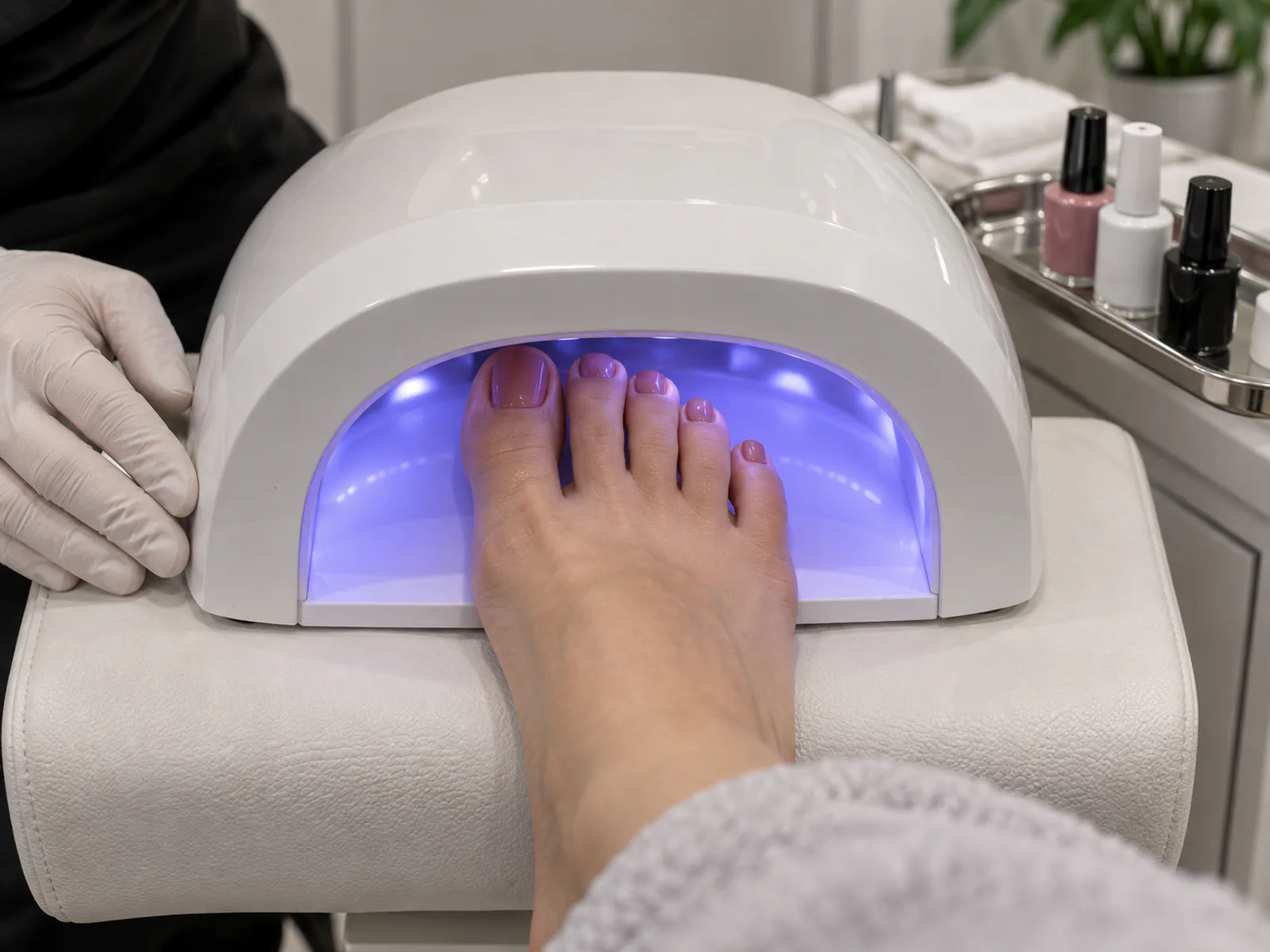
Gel polish is cured under a compatible UV or LED lamp during the appointment. Cure time per layer depends on the brand, product, lamp, and application thickness; it should not be reduced to one universal number. When the full system has been applied and cured according to its instructions, the coating is resistant to the ordinary wet-polish smudging that affects lacquer.
That does not make every gel service “instant.” Preparation, careful application, multiple lamp cycles, and any removal still take appointment time. The lamp is only one short stage within the service.
Plan around work, winter, and events
For a lunch-hour booking, ask for the salon’s scheduled duration rather than assuming “basic” means under an hour. For a winter appointment, bring sandals for the salon and roomy footwear for outside, or choose gel if the salon confirms it suits you. Do not force freshly painted toes into tight boots to meet an optimistic clock.
Before an important event, leave a buffer for consultation, add-ons, payment, and travel. If using regular lacquer, book early enough that you do not need immediate pressure from dress shoes. Gel avoids lacquer smudging, but removal and nail condition still deserve consideration.
For inspiration after the practical planning is settled, browse summer pedicure styles. You can also compare the cost of a manicure in Canada if you are pairing hand and foot services.
Questions to ask the salon
- How many minutes are reserved for this exact pedicure?
- Is existing gel or dip removal included in that time and price?
- Which lacquer or gel system do you use?
- With regular lacquer, what footwear and waiting time do you recommend?
- How much time should I add for nail art, callus care, or a longer massage?
- Is the lamp specified by the gel manufacturer and maintained properly?
Browse the salon services directory to compare nail-service options, then confirm duration and removal needs directly with the salon before booking.
Frequently asked questions
How long does a basic pedicure take?
A classic or basic pedicure is commonly scheduled for 30 to 60 minutes. The salon's steps, the condition of the feet, and any added massage or polish work can change the time, so check the booked duration.
How long does regular polish take to dry after a pedicure?
It depends on the full polish system and coat thickness. As one manufacturer example, Essie recommends about 15 minutes of stillness but says its regular polish is not completely dry for two to three hours. Follow the guidance for the product your salon used.
When can I wear closed-toe shoes after a pedicure?
There is no universal safe time for regular lacquer. Open-toed sandals are the lowest-risk choice. If you need closed shoes, ask the technician about the exact polish system and allow as much time as possible; tight shoes and thick socks create more pressure.
Does gel removal add time to a pedicure?
Yes. Removal may add roughly 15 to 30 minutes, but the time depends on whether the existing product is soak-off gel, hard gel, or dip powder and on its condition. Mention removal when booking so the salon reserves the right service.
Why does a spa pedicure take longer than a classic pedicure?
A spa pedicure may add a longer massage, scrub, mask, paraffin, hot towels, or more detailed callus care. Because the term is not standardized, compare the listed steps instead of relying on the word ‘spa’ alone.
How much time should I allow before an event?
Leave a buffer beyond the booked appointment for payment, travel, and any add-ons. With regular lacquer, schedule early enough to avoid immediate socks or dress-shoe pressure. Gel resists wet-polish smudging once properly cured under its compatible lamp.
Need a salon after reading?
Use the directory, local pages, and service hubs to compare salons in Canada with more confidence.