
Haircare
Professional Haircare for Canadian Winter Hair
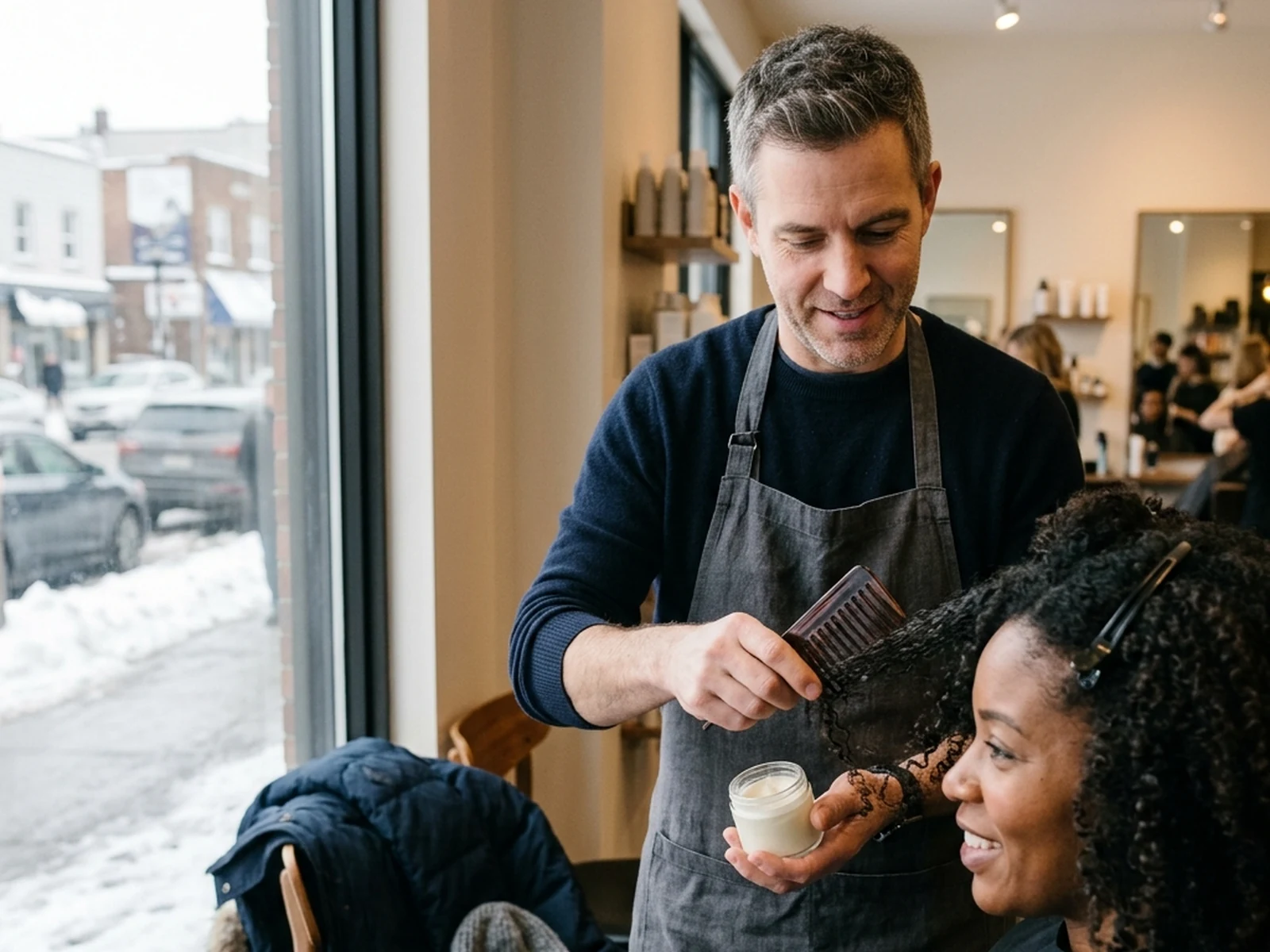
Canadian winter can make hair feel drier, flatter, rougher, or more static-prone. Cold outdoor air, heated indoor spaces, hats, scarves, and longer gaps between washes can all change how hair behaves. The answer is not always a heavier product. Sometimes it is a better haircut shape, a gentler cleansing rhythm, a conditioning service, or a different styling technique.
Professional haircare can help frame the conversation with a stylist, especially if winter dryness overlaps with colour, lightening, curls, scalp comfort, or frizz. This article is not a product prescription. Use it to prepare questions before booking deep conditioning, scalp treatment, bond repair treatment, or a winter blowout.
Dryness and static
Low humidity and indoor heating can make hair feel rough or static-prone. A stylist may talk about masks, leave-in conditioners, oils, creams, heat protection, or gentler cleansing. Brands such as Moroccanoil, Kerastase, Redken, amika, and Biolage are useful research pages for hydration and smoothing categories.
Ask whether your hair needs moisture, repair support, or both. Those words are often used together, but they are not identical. Hair that feels dry after bleach may need a different conversation than hair that is naturally coarse and dehydrated by winter air.
Colour-treated winter hair
Winter can make colour maintenance feel more difficult because dry ends and indoor heat may reduce shine. If you have fresh colour, balayage, toner, or gloss, ask how often to wash, whether heat tools need extra protection, and when to book a refresh.
Pureology, Redken, OLAPLEX, Kerastase, and Color Wow may be relevant when comparing colour-care, bond-support, shine, and frizz-control categories. Related services include hair colour, balayage, toner, and hair gloss treatment.
Scalp comfort
Dryness, hats, product buildup, and changes in washing frequency can affect scalp comfort in winter. A salon can discuss cleansing habits, scalp massage, exfoliation-style services, or product buildup, but persistent irritation, scaling, pain, or sudden hair changes should be discussed with a healthcare professional.
Nioxin, Kerastase, Aveda, and Davines are relevant research pages for scalp or consultation-led care. Compare scalp analysis, scalp treatment, and hair spa before booking.
Curls, texture, and hats
Curly and textured hair may need more moisture planning in winter, but heavy products can collapse some curl patterns. Hats and scarves can also flatten roots or create friction. Ask your stylist how to refresh curls, protect ends, and reduce buildup without stripping the hair.
Davines, amika, Kevin.Murphy, and Kerastase may be useful starting points for curl, texture, hydration, and styling categories. Related services include curly hair treatment, curly haircut, and deep conditioning.
Winter blowouts and frizz
Winter styling is not only about dryness. Snow, scarves, indoor heat, and static can all affect a blowout. A stylist may adjust prep, brushwork, finishing products, or heat protection. Moroccanoil, Color Wow, amika, and Paul Mitchell are relevant brand pages for blowout and finishing research.
Ask whether the goal is smoothness, volume, shine, or hold. If you need the style to last for an event, mention hats, travel time, and weather exposure.
Build a simple winter routine
A winter routine does not need to be complicated. Many clients need one better conditioning step, one styling adjustment, and a clearer wash rhythm. Ask which product category matters most and which products can be skipped. Too many layers can leave fine hair limp or curls coated.
Book maintenance before the hair feels unmanageable
Winter appointments are easier to plan before the hair reaches a breaking point. If your ends feel rough, your colour looks dull, or your scalp feels tight, consider a maintenance visit rather than waiting for a major change. A stylist may suggest a trim, a gloss, a moisture-focused service, a scalp service, or a lighter styling routine depending on what they see.
If you travel between very cold outdoor weather and dry indoor heat, mention that during the consultation. The routine that works in a humid summer may not be the routine that keeps hair comfortable in January. This is also a good moment to ask whether your current products are too heavy, too cleansing, or missing heat protection.
What to avoid
Avoid adding several new products at once, especially if your scalp is uncomfortable or your hair is freshly coloured. Avoid very hot tools without heat protection, aggressive towel drying, and stretching a colour appointment without asking how to maintain tone and shine. Small routine changes are easier to judge than a complete product reset.
For broader research, read the professional haircare brand guide and browse professional hair care brands.
Need a salon after reading?
Use the directory, local pages, and service hubs to compare salons in Canada with more confidence.