
Haircare
Do Tape-In Extensions Need Sulfate-Free Shampoo?
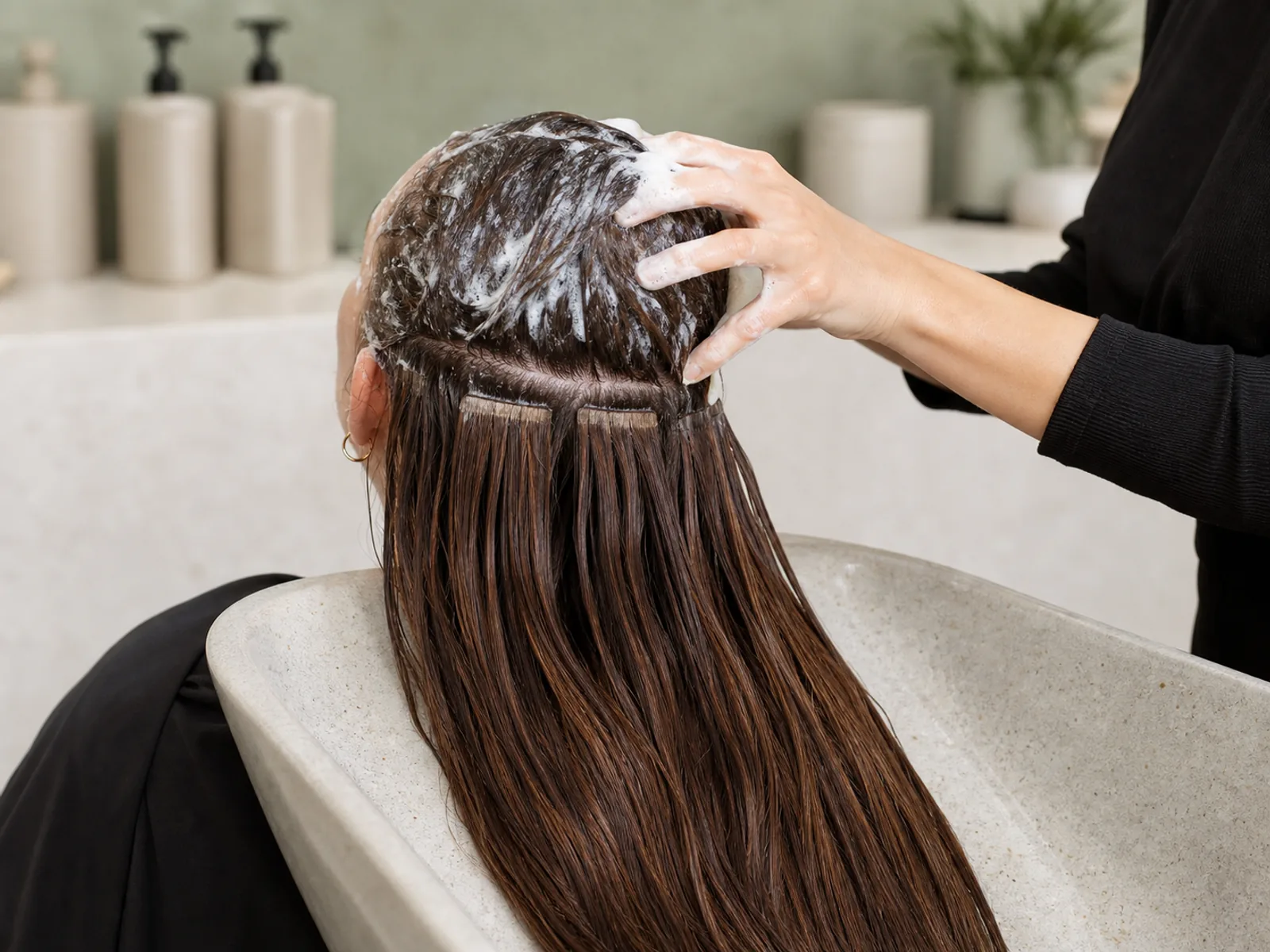
Most tape-in extension manufacturers and installers recommend sulfate-free shampoo. Sulfates are strong detergents that can be too stripping for extension hair, which has no natural oil supply, and some tape systems require compatible cleansers to protect the attachment.
That said, the recommendation is not entirely universal. Different brands have different care requirements, and your stylist’s or manufacturer’s specific guidance should always come first. Here is what the approved manufacturer guidance supports and how to care for tape-in extensions properly.
What Does Sulfate-Free Mean?
Sulfates — such as sodium lauryl sulfate (SLS) and sodium laureth sulfate (SLES) — are cleaning agents found in many conventional shampoos. They create lather and remove oil, dirt, and product buildup effectively.
A sulfate-free shampoo uses other surfactants to clean the hair, often with a less-stripping result. Preserving moisture matters for extension hair because it does not receive sebum (natural oil) from the scalp.
Can Sulfates Damage Tape-In Extensions?
There are two separate concerns with shampoo and tape-in extensions:
1. Product compatibility around the adhesive. Some manufacturers warn that incompatible cleansers, heavy oils, or certain silicone-rich products used near the attachment can reduce bond performance and contribute to early slipping. This is why the instructions for the specific tape system matter more than a universal ingredient rule.
2. Moisture stripping from extension hair. Because extension hair does not receive sebum from the scalp the way your natural hair does, it relies on external moisture from conditioners and treatments. Strong cleansing shampoos can leave extension hair dry, tangled, and prone to matting.
Not every sulfate shampoo will instantly destroy a tape bond, and sulfate-free wording alone does not guarantee that a product suits every system. Manufacturers like Bellami Hair and Great Lengths publish care requirements for their extension systems. Check the instructions for your installed brand and ask your stylist which products are compatible.
What Actually Causes Tape-In Extensions to Slip?
Sulfate shampoo gets a lot of the blame, but slipping can happen for several reasons:
- Oils near the adhesive tabs — Natural scalp oils or oil-based styling products applied near the roots can interfere with the bond over time.
- Conditioner on the tape tabs — Conditioner applied directly to the bond area can weaken the attachment and contribute to slipping.
- Product buildup around the bond — Heavy leave-in products, dry shampoo, or silicone-based serums near the attachment point can create buildup around the tape.
- Wet hair handling — Sleeping with wet hair or leaving the tape tabs damp for extended periods can compromise the attachment. Follow your installer’s drying instructions.
- Installation quality — Poor sectioning, incorrect placement, or using the wrong tape system can cause early slipping regardless of aftercare.
- Overdue maintenance — As natural hair grows, the wefts move farther from the scalp and need professional repositioning on the schedule recommended for that system.
If your extensions are slipping and you are already using sulfate-free shampoo, the issue may be related to one of these other factors. A maintenance appointment with your installer can help identify the cause.
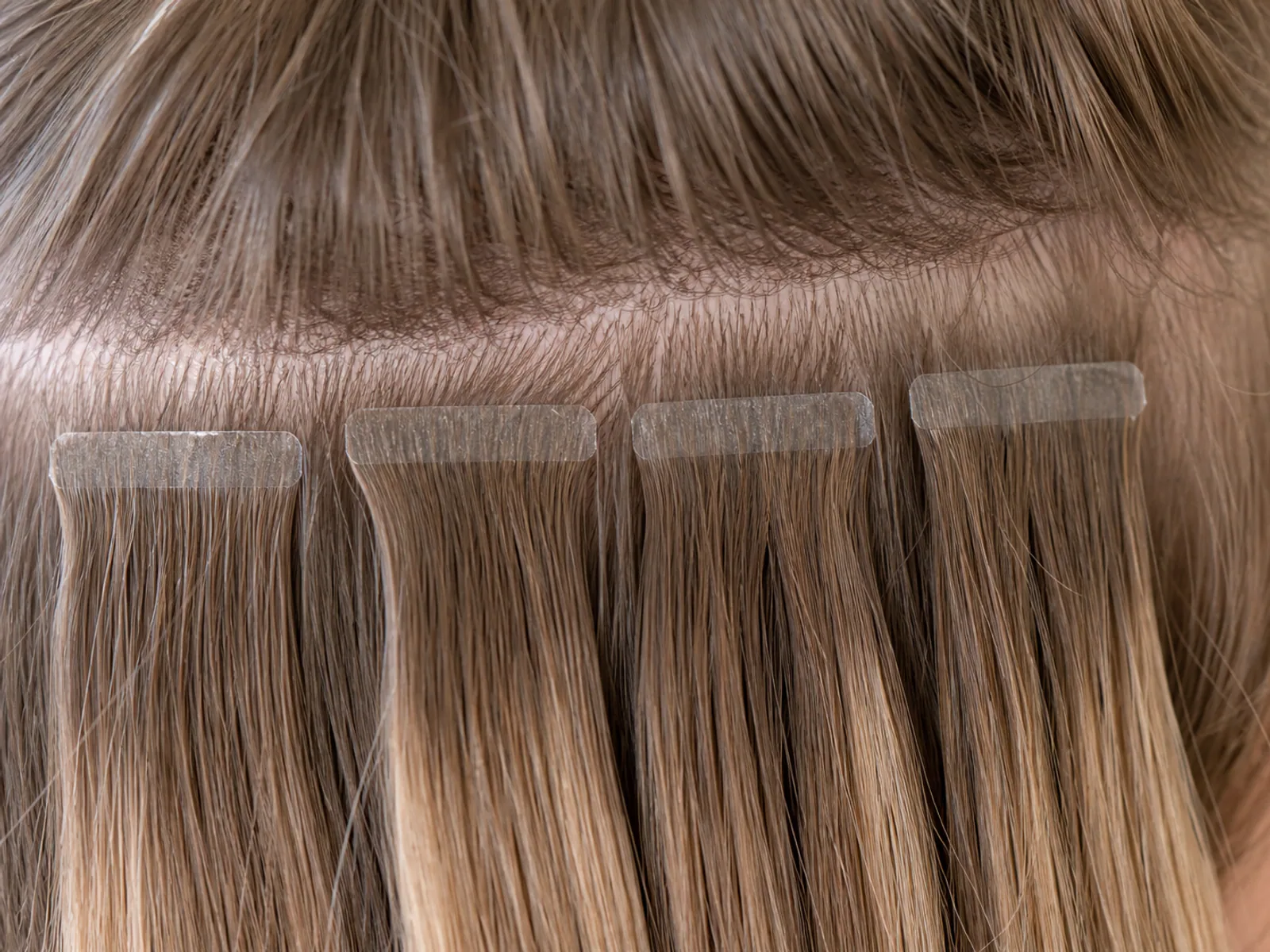
How to Wash Tape-In Hair Extensions
Proper washing technique is just as important as the shampoo you choose.
- Brush gently before washing. Use a loop brush or soft-bristle brush to detangle from the ends upward. Never pull through the tape tabs.
- Wet the hair with lukewarm water. Avoid very hot water around the attachment area.
- Apply the approved shampoo to the scalp. Press the shampoo gently into the roots. Do not scrub in circular motions near the tape tabs — this can cause matting and place stress on the bonds.
- Let the shampoo rinse through the lengths. The runoff is usually enough to clean the mid-lengths and ends without rubbing.
- Apply conditioner from mid-lengths to ends only. Keep conditioner away from the tape attachment area unless the manufacturer or installer specifically directs otherwise.
- Rinse thoroughly with cool or lukewarm water.
- Gently squeeze out excess water. Do not wring or twist the hair.
The washing guidance from Hairdreams advises against circular friction near extension attachments because this motion can tangle natural hair around the bonds.
Where Should Conditioner Go?
General tape-in aftercare guidance places conditioner from the mid-lengths to the ends of the hair, away from the attachment area.
Conditioning products often contain emollients or oils that may interfere with adhesive when placed directly on the tabs. Exact placement guidance can differ by system, so follow the product and installer instructions supplied with your extensions.
If your natural hair tends to get dry near the roots, ask your stylist about lightweight options and how to apply them without coating the attachment area.
Can You Use Clarifying Shampoo?
Clarifying shampoo is a different category from sulfate-free shampoo. It is designed to strip heavy buildup from the hair and scalp.
In a tape-in extension context:
- Before installation, a stylist may use clarifying shampoo to remove scalp oils and product residue so the adhesive bonds to clean hair.
- After installation, clarifying shampoo may be too stripping for the extension hair or incompatible with the attachment system. Do not use it unless the installer or manufacturer recommends it.
Some brands may allow occasional clarifying use under specific conditions, while others do not. The instructions for your tape system take priority.
Should You Avoid Silicone?
Silicone in hair products is a nuanced topic. Some extension wearers are told to avoid all silicones, but the advice is not always that simple.
- Heavy or buildup-prone silicone products used near the roots may coat the bond area and interfere with attachment performance.
- Other silicone-containing formulas may be approved by a manufacturer for use on the lengths and ends.
The concern is primarily about incompatible product buildup around the roots and bond area. Silicone in a conditioner used only on the mid-lengths and ends may be acceptable for some systems.
Rather than following a blanket silicone ban, check the specific product guidance from your extension manufacturer. Brands such as Great Lengths and Bellami publish recommended care information that accounts for their own attachment systems.
How Often Should Tape-In Extensions Be Washed?
There is no single correct answer. Washing frequency depends on your scalp type, activity level, styling routine, and the specific extension system you are wearing.
Many care routines recommend washing only as often as needed rather than daily, while clients with oilier scalps may need a different schedule. Ask your installer how to balance scalp cleansing, extension moisture, and bond care for your system.
Dry shampoo may extend time between washes, but use only a compatible product and avoid heavy buildup around the tape tabs.
Drying and Sleeping
How you dry and sleep with tape-in extensions matters for bond longevity.
- Dry the roots and tape area thoroughly after every wash. Follow the heat setting recommended by your installer and make sure the tabs are not left damp.
- Avoid sleeping with wet hair. Damp hair can mat near the attachment point and place unnecessary stress on the bonds.
- Secure the hair loosely before bed. A loose braid or low ponytail can reduce tangling and friction on the wefts overnight.
- Consider a smooth pillowcase. A silk or satin surface may reduce friction on the extension hair, although it does not replace correct bond care.
Professional Maintenance
Tape-in extensions are not a one-and-done service. Regular professional maintenance keeps the bonds secure and the hair looking natural.
- Repositioning appointments are commonly needed every six to eight weeks, but the correct interval depends on the system and hair growth. During this visit, the stylist removes the wefts, cleans the natural hair and tabs, applies the approved replacement tape, and reattaches the extensions closer to the scalp.
- Condition checks allow the stylist to assess the natural hair for stress, thinning, or damage near the attachment points.
- Installer and manufacturer guidance should be your primary reference because brands use different maintenance schedules, adhesive systems, and product requirements.
If you are looking for a salon experienced with extension care and professional hair treatments, the salon directory can help you compare options by city and service. Check individual salon profiles for extension-specific services and availability before booking.
Frequently Asked Questions
Can I use regular shampoo on tape-in extensions?
Many manufacturers advise using a compatible sulfate-free shampoo, but the requirement varies. Check your extension brand’s care instructions and use the shampoo approved by your installer.
Why do my tape-in extensions keep slipping?
Slipping may be caused by oils, conditioner, or product buildup near the adhesive tabs — not shampoo alone. Damp bonds, installation issues, and overdue maintenance can also contribute.
Can I colour my tape-in extensions?
This depends on the extension hair and manufacturer. Some human-hair extensions can be coloured by a professional, but processing may change the hair or affect a warranty. Ask the manufacturer and installer first.
How long do tape-in extensions last?
Wear life varies by the hair quality, attachment system, home care, and maintenance schedule. Some extension hair can be reused across repositioning appointments, while other systems or worn hair need replacement sooner. Your installer can explain what applies to your set.
Can I swim with tape-in extensions?
Swimming guidance varies by system. Chlorinated and salt water can dry extension hair, and products used before or after swimming may affect the bonds. Ask your installer about protection, rinsing, drying, and conditioning for your brand before swimming.
Should I use a specific brush for tape-in extensions?
Many installers recommend a loop brush or an extension-safe soft-bristle brush that will not catch the tabs. Brush gently from the ends upward and support the attachment area with your hand.
Can I use heat tools on tape-in extensions?
Human-hair extensions may tolerate moderate heat styling with appropriate protection, but direct heat can affect tape tabs. Follow the temperature and placement guidance for your specific system.
Where can I find salons that specialise in extensions in Canada?
You can browse hair salons across Canada to find professionals who offer tape-in extension installation and maintenance. Check each salon’s profile to confirm its extension services and the brands it works with.
Find Extension Services in Canada
Proper tape-in extension care starts with the right salon. If you need an installation, a maintenance appointment, or a consultation about extension options, you can explore hair treatment services across Canada. Check individual salon services and availability before booking.
Need a salon after reading?
Use the directory, local pages, and service hubs to compare salons in Canada with more confidence.