
Guide
Smooth Hair Guide
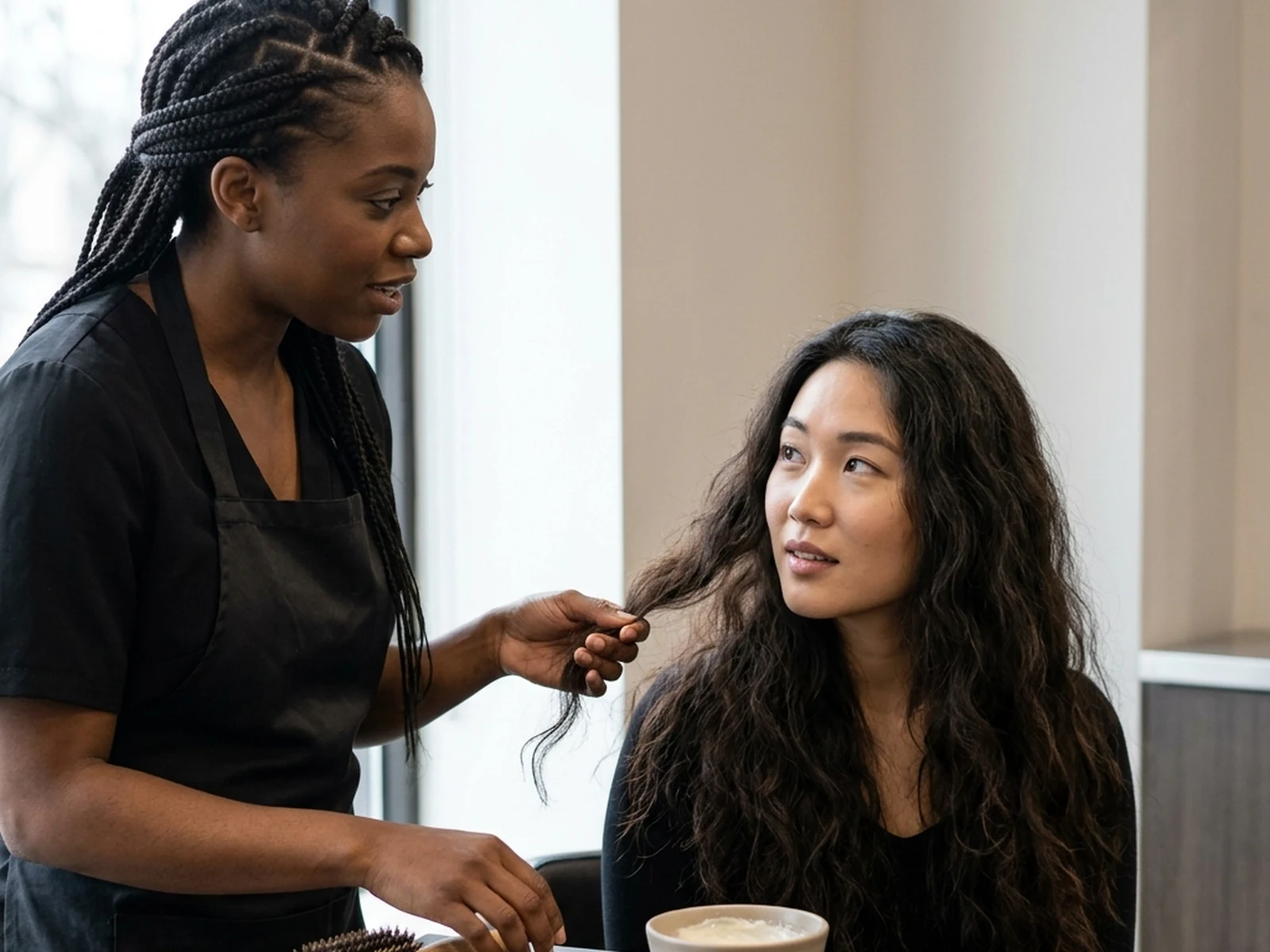
Smoothing goals usually sit on a spectrum. Some clients want temporary polish for events, while others want a longer-lasting reduction in frizz and daily styling time. The right approach depends on hair texture, lifestyle, budget, and how much maintenance you are willing to commit to.
This guide helps you understand your options before booking. It does not recommend specific products or brands, and it does not diagnose hair or scalp conditions.
Why hair frizzes
Frizz happens when the outer layer of the hair strand (the cuticle) lifts and allows moisture from the surrounding air to enter the cortex unevenly. The hair swells in irregular ways, creating the rough, puffy appearance people associate with frizz.
Several factors influence how much frizz you experience:
Hair texture and porosity. Curly, wavy, and coarse hair types tend to have cuticles that are naturally more raised, making them more susceptible to frizz. High-porosity hair absorbs and releases moisture quickly, which can make frizz worse in changing conditions.
Humidity. Canadian summers — particularly in regions like Southern Ontario, the BC Lower Mainland, and the Atlantic provinces — bring humid conditions that increase frizz for many hair types. However, very dry winter air can also cause frizz by stripping moisture and creating static.
Heat damage. Repeated flat ironing, blow drying at high temperatures, or using heated tools without protection can damage the cuticle permanently, making frizz a structural issue rather than a seasonal one.
Chemical history. Hair that has been coloured, permed, relaxed, or lightened may have a compromised cuticle, increasing frizz even in moderate humidity.
Product buildup and hard water. Silicone buildup can create an uneven coating that flakes or separates, while mineral deposits from hard water can roughen the hair surface.
Understanding the source helps determine whether you need a temporary smoothing service, a longer-term chemical treatment, or primarily a change in home routine. For more on treatment-specific choices, see salon treatments for frizzy hair in Canada.
Smoothing service options
Salons offer several approaches to smoother hair. Each works differently, lasts a different amount of time, and suits different hair types and goals.
| Service | How it works | Typical duration | Maintenance commitment |
|---|---|---|---|
| Blowout | Heat styling with a round brush to smooth and shape the hair after washing | A few days, depending on activity and weather | Low — one-time styling, no chemical change |
| Keratin treatment | A protein-based formula is applied and sealed with a flat iron to smooth the cuticle | Typically 2 to 4 months, fading gradually | Moderate — requires sulfate-free products and specific aftercare |
| Hair botox | A conditioning and smoothing treatment that coats the hair shaft without restructuring it | Typically 4 to 8 weeks | Low to moderate — gentler than keratin, fewer restrictions |
| Deep conditioning | Intensive moisture treatment to improve hair feel, shine, and manageability | Temporary, until the next wash cycle | Low — no chemical commitment |
| Haircut shape | A well-chosen cut can reduce bulk and weight distribution issues that contribute to frizz | Lasts until the next cut | Low — no product dependency |
Important considerations:
- Keratin treatments involve formaldehyde or formaldehyde-releasing ingredients in some formulations. Ask the salon what specific system they use and what the ventilation setup is during application. Health Canada regulates cosmetic products, and some formulations have been flagged for exceeding safe exposure limits.
- No smoothing service eliminates frizz permanently. Results depend on hair type, climate, product use, and aftercare.
- A blowout is the lowest-commitment option and can help you evaluate whether you like the smoother look before investing in a chemical service.
Home care
Salon smoothing services last longer when the home routine supports the result. These are general principles, not rules tied to a specific product or brand.
Gentle cleansing. After a keratin or smoothing treatment, most providers recommend a sulfate-free shampoo. Sulfates can strip the treatment coating more quickly. For more on sulfate-free products, the sulfate-free shampoo guide covers this topic in detail.
Reducing heat damage. If frizz is partly caused by cuticle damage, continuing to flat iron daily at high temperatures works against the goal. Use a lower heat setting and always apply heat protection.
Moisture balance. Dry hair frizzes more. A leave-in conditioner, a weekly deep conditioning mask, or a lightweight oil on damp ends can help maintain moisture without weighing the hair down. Adjust for the season — slightly richer products in dry Canadian winters, lighter formulas in humid summers.
Drying technique. Rough towel drying roughs up the cuticle. Gently squeezing water out with a microfibre towel or soft t-shirt, then air drying or diffusing on low heat, can reduce frizz without any product.
Sleep protection. A silk or satin pillowcase creates less friction than cotton, helping maintain smoother hair overnight. Loosely tying the hair on top of the head can also help preserve a blowout or smoothing treatment.
Avoid overloading. Using too many smoothing products — serum, cream, oil, spray — can create buildup that makes hair feel heavy or look greasy. Start with one leave-in product and add only if needed.
How to compare salons
Not all smoothing services are equal. The product system, the stylist’s experience with your hair type, and the aftercare instructions can vary significantly between salons. Here is what to consider:
Ask about the specific system. “Keratin treatment” is a broad category. Ask which product line the salon uses, what the active ingredients are, and how long the application takes. A salon that explains the process clearly is generally more transparent about what you can expect.
Discuss your hair type and history. A stylist who asks about your colour history, damage level, and daily routine before recommending a service is more likely to give you a realistic outcome. Be wary of one-size-fits-all claims.
Compare aftercare instructions. Aftercare varies by product system. Some keratin treatments require 48 to 72 hours before washing; others allow same-day washing. Ask for written aftercare instructions before you commit.
Check pricing transparency. Smoothing services can range significantly in price depending on hair length, thickness, and the product system used. Ask for a quote that accounts for your specific hair rather than relying on a starting price.
Look at realistic expectations. A salon that promises “perfectly straight, frizz-free hair for six months” is likely overstating. Results depend on your hair, your environment, and your maintenance. Realistic timelines and honest disclaimers are signs of a trustworthy provider.
Consider a consultation first. Many salons offer free or paid consultations where a stylist can assess your hair and recommend the most appropriate service. This is especially useful if you are choosing between a keratin treatment and a less intensive option.
If you already know you want a smoothing service, browsing the keratin treatment directory or the blowout directory can help you compare options near you.
Frequently asked questions
What salon treatments can help with frizzy hair?
Frizz support often includes smoothing treatments, tailored hydration, bond repair, careful cutting, and more precise at-home product recommendations. A scalp or texture consultation can help narrow the right option.
Ready to compare salons?
Move from guide reading into local discovery with service pages, city pages, and featured salon profiles.