
Hair Extensions
How Are Tape-In Hair Extensions Removed? Salon Removal, Reapplication & Aftercare
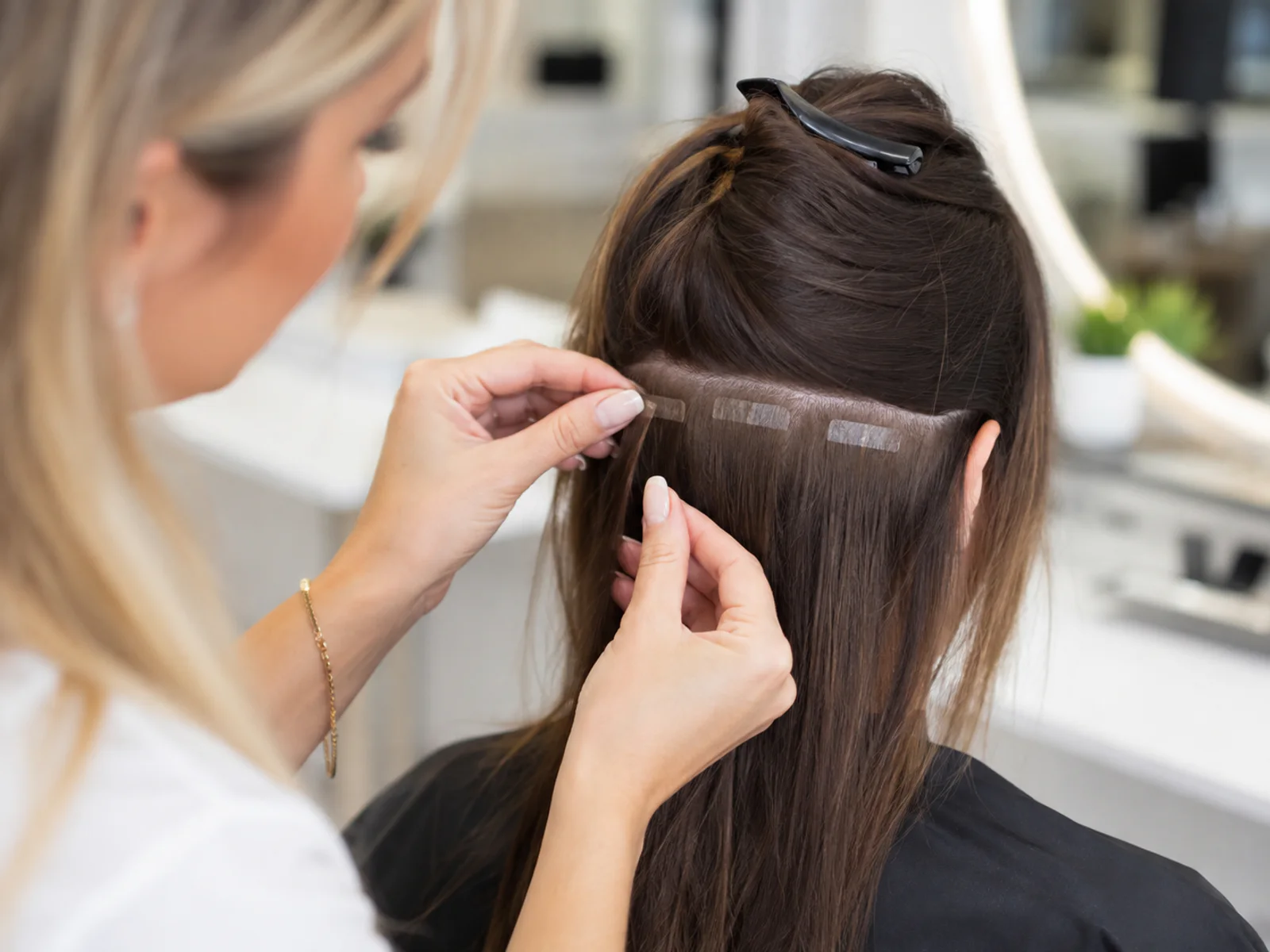
Tape-in hair extensions are professionally removed by applying a specialised, system-appropriate adhesive remover to the tape bonds. Once the adhesive has released, the stylist gently separates the wefts and frees them from the natural hair without pulling or peeling.
If you are due for a maintenance appointment or switching extension styles, here is what happens during professional removal, what to expect with shedding, and how the reapplication process works.
How Are Tape-In Extensions Professionally Removed?
The salon removal process follows a controlled sequence designed to reduce stress on your natural hair.
Sectioning
Your stylist begins by sectioning your hair to isolate each tape-in bond. This ensures every weft is addressed individually rather than pulled through tangled sections.
Applying the Adhesive Remover
A system-appropriate adhesive remover is applied directly to each tape bond. It is formulated to break down the adhesive used by that tape-in system. Some professional removers release a bond in 30 to 60 seconds, but the stylist should follow the product instructions and allow more time when needed.
Separating the Wefts
Once the adhesive has softened, the stylist gently separates the two sandwiched tape tabs and slides the extension weft away from the natural hair. This should be a smooth, controlled motion—not pulling or ripping.
Removing Adhesive Residue
After the wefts are out, some adhesive residue may remain on the natural hair. The stylist works through this residue carefully, then cleanses the hair as required for the extension system, often with a clarifying shampoo, to remove remaining product.
The process is methodical and should not involve force. Tell your stylist if you feel pulling or discomfort.
How Long Does Tape-In Removal Take?
A full removal session often takes 30 to 60 minutes, but the time varies with several factors:
- Number of tape sections—a full head of tape-ins involves more bonds than a partial set.
- Adhesive buildup—if the extensions have been in longer than the recommended maintenance window, the adhesive may take longer to break down.
- Tangling—extensions that were not properly maintained between appointments may require more careful detangling.
- Hair density—thicker natural hair with more extension sections naturally takes longer.
If you are having your extensions removed and immediately reapplied in the same appointment, the total visit may take 1.5 to 3 hours, depending on the number of wefts, the extension system, and whether the extension hair needs to be cleaned and re-taped.
Why Is There Shed Hair During Removal?
Seeing a noticeable amount of hair come out during removal can be alarming for first-time extension clients. A significant portion may be accumulated natural shedding, but the amount and condition of the hair still need to be considered rather than assuming every clump is normal.
People commonly shed about 50 to 100 hairs per day. When you wear tape-in extensions, some naturally shed hairs cannot fall away because they remain caught within the installed sections. Over 6 to 8 weeks, the trapped hairs can add up.
When the extensions are removed, those accumulated shed hairs are released at once. This can look like sudden hair loss even when much of it represents normal daily shedding from the previous weeks.
How to Tell the Difference Between Shedding and Breakage
Naturally shed hairs are usually full-length and may have a small white or translucent club-shaped bulb at the root end, indicating that the hair released at the end of its growth cycle.
Broken hairs tend to be shorter and lack that root end. This visual difference can be a useful clue, but it is not a diagnosis. If you see many short broken strands, scalp soreness, thinning, or an amount of hair that concerns you, ask your stylist to assess the installation and consult a healthcare professional when appropriate.
Can Tape-In Extensions Be Reused?
Many high-quality human-hair tape-in extensions can be reused. With proper care, some good-quality extension hair may last 6 to 12 months in total through several maintenance cycles.
However, reuse depends on several factors:
- Hair quality—higher-quality human-hair extension wefts often hold up better over repeated use.
- Condition of the extension hair—if it is matted, severely tangled, or visibly damaged, it may not be suitable for reapplication.
- System and manufacturer—different tape-in products have different reuse and maintenance instructions.
- Adhesive tabs—reusable systems generally require fresh adhesive tabs at each maintenance appointment.
Not all tape-in extensions can be reused, and none should be assumed reusable indefinitely. Your stylist can assess the wefts at removal and compare their condition with the manufacturer’s guidance.
Can Tape-In Removal Damage Natural Hair?
Using the correct remover and a controlled professional technique reduces the risk of damaging natural hair, but no extension service is entirely risk-free. The goal is to release each adhesive bond without pulling on the natural strands.
Damage is more likely when:
- Extensions are pulled or peeled off before the adhesive has released. This can remove healthy hairs along with naturally shed ones.
- Leftover adhesive is scraped or forced off rather than softened and cleaned appropriately.
- Extensions are left in too long past their recommended maintenance window, allowing matting, excessive tangling, or uneven tension to develop.
- Extensions were installed incorrectly—for example, too close to the scalp, too heavy for the natural hair, or on sections unable to support their weight. Excessive or prolonged tension can contribute to traction-related hair concerns.
Professional removal with products intended for the installed system is the safer approach. Do not pull, peel, or substitute household products for a professional remover.
What Happens to Adhesive Residue?
After the extension wefts are separated, some adhesive residue may remain on the natural hair and on reusable wefts.
The stylist uses a system-appropriate remover and cleansing process to work residue from the natural hair. If the wefts will be reused, the old adhesive is carefully cleaned from the tape area before fresh adhesive tabs are applied.
Leaving residue in the hair can contribute to matting, make brushing difficult, and interfere with new bonds. Removing it methodically is an important part of the salon appointment.
What Happens Before Reapplication?
If you are having your tape-ins moved up—reinstalled after removal—the reapplication process involves several steps before the extensions go back in.
Cleaning the Extension Hair
The extension wefts are cleaned and any remaining adhesive is removed from the bonding area. The exact cleaning process varies by product and salon.
Replacing Adhesive Tabs
For reusable systems, fresh double-sided adhesive tabs are applied to the clean wefts. Old adhesive is not reused.
Assessing the Natural Hair
Before reapplication, your stylist checks the condition of your natural hair and scalp. This is an opportunity to assess growth, identify areas that need a break, and decide whether the placement should be adjusted.
Repositioning
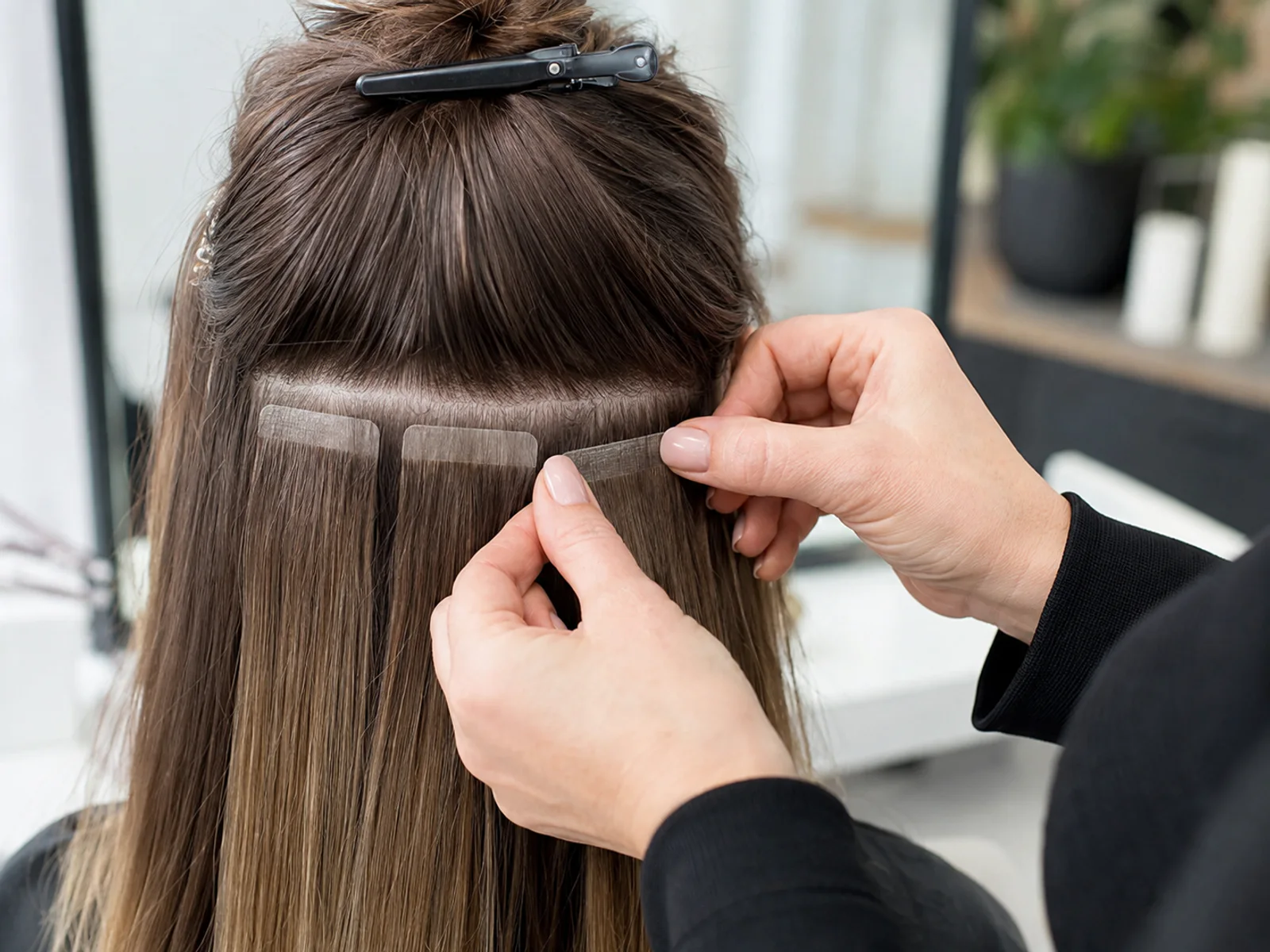
As your natural hair grows, the tape bonds move away from the scalp. At maintenance, reusable extensions are placed again according to the system instructions, closer to the root without touching the scalp, to restore their position and weight distribution.
How Often Are Tape-Ins Repositioned?
Many tape-in extension systems recommend a maintenance appointment about every 6 to 8 weeks. This is a general range, not a universal schedule. As natural hair grows, the bonds shift downward and may become more visible or less secure.
The actual timing depends on:
- How fast your hair grows—some people need maintenance closer to 6 weeks; others may be advised differently.
- Your extension system—manufacturers can specify different maintenance intervals.
- Bond slippage—if bonds start sliding or feeling loose, contact the salon rather than waiting for a calendar date.
- At-home care—using products and techniques compatible with the installed system helps the bonds last between appointments.
Your stylist should recommend a schedule based on the system and how your extensions are holding up. Waiting too long can increase matting, tangling, and removal time.
When Might Extensions Not Be Reused?
Your stylist may recommend replacing the extension hair rather than reapplying it when:
- The extension hair is matted or severely tangled and cannot be returned to a usable condition.
- The wefts show visible wear, such as thinning, fraying, or significant hair loss from the weft strip.
- The extension hair has degraded over several maintenance cycles and no longer blends naturally.
- The manufacturer’s recommended lifespan for the specific product has been reached.
The final decision depends on the condition of the wefts and the instructions for that system, not a universal reuse count.
Aftercare After Reapplication
Once your tape-ins are freshly reapplied, system-appropriate aftercare helps keep them secure between maintenance visits.
Key practices include:
- Follow your stylist’s product-specific guidance on when the bonds can first get wet; some systems recommend a 24-to-48-hour waiting period, while others differ.
- Use an extension-compatible shampoo and conditioner. The guide to washing your tape-in extensions explains which ingredients may affect the bonds and how to shampoo around them.
- Brush gently with a tool recommended for extensions, starting from the ends and working upward while supporting the bonds.
- Avoid applying heavy conditioners, oils, or styling products directly to the tape bonds unless the product is approved for your system.
- Ask your stylist how to secure your hair for sleep to reduce overnight tangling.
Frequently Asked Questions
Will removing tape-in extensions hurt?
Removal should not involve painful pulling. The correct remover is allowed to release each bond before the weft is separated. If you feel pulling or pain, tell your stylist immediately so they can stop and reassess.
What do stylists use to dissolve the tape adhesive?
Salons use an adhesive remover designed for the installed tape-in system. The exact product and processing time vary by brand, so the stylist should follow its professional instructions.
How can I tell if my hair is shedding or breaking?
Naturally shed hairs are generally full-length and may have a small white or translucent club-shaped root end. Broken hairs are often shorter and lack that root end. The appearance is only a clue; ask a professional if you notice extensive breakage, thinning, or scalp symptoms.
Can I remove tape-in extensions at home?
Professional removal is strongly recommended. Pulling, peeling, or experimenting with household products can remove healthy hair, irritate the scalp, and leave residue that contributes to matting.
How long do tape-in extensions last before they need replacing?
Some high-quality human-hair tape-ins can last 6 to 12 months in total with appropriate care and several maintenance appointments. Reuse varies by product and condition, and fresh adhesive tabs are normally required for reusable systems.
Is it normal to lose a lot of hair when extensions come out?
It can be normal to see accumulated naturally shed hair released when the bonds come out, since daily shedding was trapped for weeks. Do not assume every amount is normal, though. Short broken hairs, visible thinning, scalp pain, or unusual hair loss should be assessed.
What happens if I wait too long between maintenance appointments?
Waiting beyond the schedule recommended for your system allows the bonds to grow farther from the scalp. This can contribute to matting, visible or loose bonds, tangling, uneven tension, and a longer removal appointment.
Do tape-in extensions damage your hair?
Correct installation, regular maintenance, and careful removal reduce the risk, but they do not guarantee that damage cannot occur. Problems are more likely with excessive weight or tension, delayed maintenance, forceful removal, or poor aftercare.
Find a Hair Salon Near You
If you are looking for professional tape-in extension services, you can browse hair salons across Canada on our directory. Check each salon’s listed services and availability before booking to confirm it offers tape-in removal and maintenance.
Need a salon after reading?
Use the directory, local pages, and service hubs to compare salons in Canada with more confidence.