
Waxing
How to Get Wax Off Skin Safely After Hair Removal
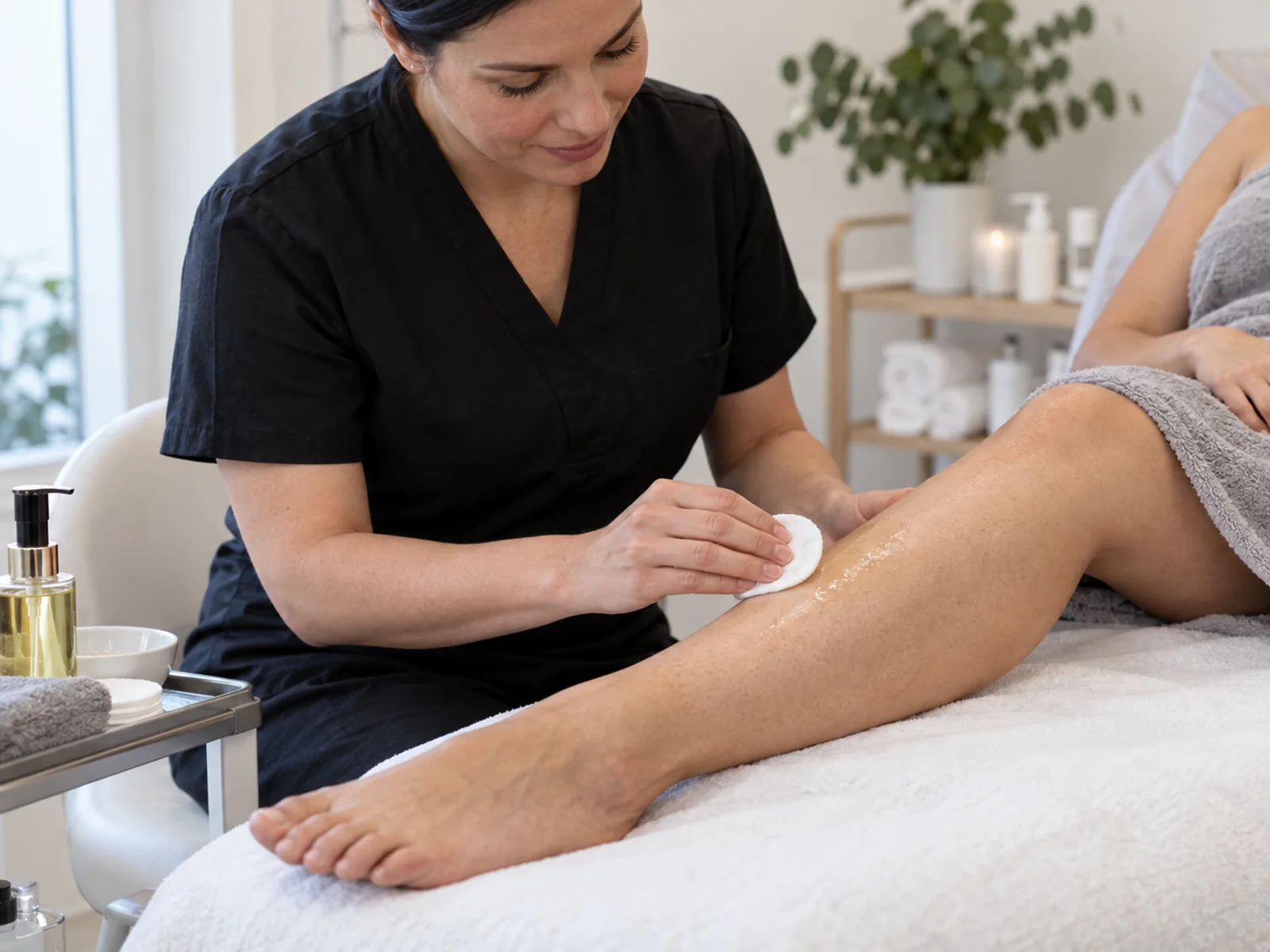
A small amount of sticky wax residue can remain on your skin after a hair-removal session. The good news is that it usually comes off easily once you know the right approach for the type of wax that was used.
The key fact: traditional wax (hard wax and soft wax) is oil-soluble, so it dissolves with oil. Sugar wax is water-soluble, so it rinses away with warm water. Soap and water alone will not break down traditional wax — that is why residue can feel difficult to remove in the shower.
Below is a step-by-step guide to getting leftover hair-removal wax off your skin safely, without scrubbing, scraping, or using anything harsh on freshly waxed skin.
Why Does Wax Stay on the Skin?
Wax is designed to grip hair so it can pull it from the follicle. That same grip can leave small sticky patches or a thin film on the skin after the strip or hardened wax is removed.
The safest response is to identify whether you are dealing with traditional resin-based wax or water-soluble sugar wax, then dissolve the residue with the appropriate method. There is no need to force it off mechanically.
How to Remove Traditional Wax (Hard Wax and Soft Wax)
Traditional hard wax and soft (strip) wax are resin-based products. They do not dissolve in water, but they do break down in oil.
Here is a gentle process:
- Apply a small amount of oil to the sticky area. Baby oil, mineral oil, or a dedicated post-wax oil are appropriate choices. Many salons use their own post-wax oil as part of the service.
- Let the oil sit briefly. This gives it time to start loosening the wax.
- Gently massage the area with your fingertips or a soft cloth. The wax should begin to lift and slide away.
- Wipe the area clean with a soft, damp cloth. Avoid rough towels or sponges.
- Repeat if needed. Stubborn patches may need a second application of oil.
If a patch of wax feels particularly stuck, placing a warm (not hot) damp cloth over the area can help soften it before you apply the oil.
Your waxing aftercare routine should begin once the residue is fully removed and the skin is clean.
How to Remove Sugar Wax
Sugar wax — also called sugaring paste — is made primarily from sugar, water, and often an acid such as lemon juice. Unlike traditional wax, it is water-soluble.
To remove sugar wax residue:
- Rinse the area with warm water. The residue should begin to dissolve.
- Pat dry gently with a clean, soft towel.
Oil is not normally needed for sugaring residue. If warm water does not remove what remains, confirm what type of product was used before trying another method.
Can Oil Remove Wax From Skin?
Yes — for traditional hard and soft wax, oil is the most effective and gentle removal method. Post-wax oils are made for this purpose because oil loosens the resin base of traditional wax without requiring friction or harsh chemicals.
Appropriate options include:
- Baby oil
- Mineral oil
- Dedicated post-wax removal oil, often included with at-home wax kits or used by salons
You do not need a complicated recipe. A small amount of skin-safe oil, massaged lightly into the residue, is usually enough.
Note: Oil is not necessary for sugar wax, which dissolves in water.
Does Warm Water Remove Wax?
It depends entirely on the wax type:
| Wax type | Water-soluble? | Removal method |
|---|---|---|
| Hard wax | No | Oil |
| Soft wax (strip wax) | No | Oil |
| Sugar wax | Yes | Warm water |
Trying to scrub traditional wax off with soap and hot water may spread the residue and irritate freshly waxed skin. If you have just had a traditional wax, reach for oil first.
What About Rubbing Alcohol?
Rubbing alcohol may dissolve some residue, but it is drying and can sting freshly waxed skin, which may already be sensitive. Skip it in favour of a skin-safe oil. If the recommended oil method does not work, contact the salon or the product manufacturer rather than experimenting with household chemicals.
What Should You Avoid?
Waxing also exfoliates the skin’s outer surface, so the area may be more vulnerable to irritation immediately afterwards.
Do not use:
- Harsh scrubbing with rough cloths, loofahs, or abrasive sponges
- Scraping with fingernails, spatulas, knives, blades, or any hard edge
- Household solvents such as acetone, nail polish remover, paint thinner, or bleach
- Strong household cleaners — these are not designed for skin contact
- Aggressive rubbing — repeated friction on freshly waxed skin can make irritation worse
The goal is to dissolve the residue, not to force it off mechanically.
What If Your Skin Is Already Irritated?
If your skin is red, tender, or slightly bumpy after waxing, handle it gently:
- Use oil briefly and without aggressive massage.
- Apply a cool, clean compress if it feels soothing; do not place ice directly on the skin.
- Avoid scented lotions, perfumes, or active skincare ingredients until the area has settled.
- Wear loose, breathable clothing over the waxed area where practical.
If the skin is broken, bleeding, or shows signs of lifting, do not rub at the residue. Contact your salon or esthetician for guidance, or speak with a healthcare provider if the area is painful, severe, or worsening.
Is Redness Normal After Waxing?
Mild redness or small bumps can be a short-term response after waxing, but reactions and recovery times vary from person to person.
Reasons to seek advice include:
- Redness that worsens instead of improving
- Increasing swelling, heat, or discharge
- A spreading rash or hives
- Persistent or worsening pain
Mild post-wax redness on its own may settle with gentle care, but do not assume that every reaction is routine.

When Should You Contact the Salon?
If you have just left a waxing appointment and are dealing with more than minor residue, it is reasonable to contact the salon. Good reasons to reach out include:
- Significant wax residue that covers a large area and does not come off with oil
- Unexpected skin lifting — where a surface layer appears to have come away with the wax
- Severe irritation that goes beyond mild temporary redness
- Concerns about the product or technique used during the service
A professional salon should be able to advise you or arrange a follow-up if needed.
When Should You Seek Medical Advice?
Wax residue itself does not usually require medical attention. Consider speaking with a doctor or dermatologist if:
- The area develops increasing redness, warmth, swelling, or discharge
- You develop widespread hives, difficulty breathing, or facial swelling
- Lifted or torn skin is not healing as expected
- Pain is severe or getting worse
Do not try to diagnose a burn, infection, or allergic reaction yourself. Seek urgent care for difficulty breathing, facial swelling, or another severe reaction.
Post-Wax Aftercare Tips
Once the residue is removed and your skin is clean, use a simple, gentle routine while the area settles:
- Avoid very hot baths, saunas, and steam rooms while the skin remains sensitive.
- Reduce sweat and friction by postponing intense exercise if the area is irritated.
- Keep fragrance, retinoids, AHAs, BHAs, and other active products off the treated area until it has calmed.
- Resume exfoliation only when the skin feels ready and your esthetician’s guidance allows it.
- Protect the treated area from strong sun exposure.
- Wear loose clothing where practical to reduce rubbing.
These are general guidelines. Follow the instructions from your esthetician or product manufacturer for the area treated, wax system used, and your skin.
Frequently Asked Questions
Can I just use soap and water to get wax off?
Only if you had sugar wax (sugaring). Sugar wax is water-soluble and rinses away with warm water. Traditional hard wax and soft wax are oil-soluble — soap and water will not dissolve them. Use baby oil, mineral oil, or a post-wax oil instead.
Will baby oil clog my pores after waxing?
Skin responses vary. Use only enough baby oil to loosen the residue, then wipe it away gently. If the treated area is prone to breakouts, cleanse with a mild, fragrance-free wash after the residue is gone and ask your esthetician which post-wax product suits your skin.
Can I peel or pick at the remaining wax?
It is best not to. Pulling or picking at dried wax can tug on freshly waxed skin and cause irritation. Use oil to dissolve the residue instead — it requires much less force.
What if the wax is stuck to body hair?
Apply a skin-safe oil and let it loosen the residue before gently working through the area with your fingers. Do not pull, scrape, or cut at wax close to the skin. Contact the salon if it remains stuck.
How do I remove hard wax residue specifically?
Hard wax responds to the same oil method as soft wax. Apply baby oil, mineral oil, or post-wax oil, massage gently, and wipe clean with a soft cloth. A warm damp cloth may help soften a thick patch first.
How do I get sugar wax off?
Rinse with warm water. Sugar wax dissolves in water, so oil is not normally needed. If residue remains, confirm that the product was actually sugar wax.
Is it normal for wax to be left on my skin after a salon appointment?
A small amount of residue can happen, and salons normally clean the treated area before you leave. If you notice a little later, the method for your wax type should remove it. Contact the salon if a large area was left behind or the residue will not lift gently.
Can I use coconut oil to remove wax?
A plain, skin-safe oil such as coconut oil may loosen traditional wax, but baby oil, mineral oil, and dedicated post-wax oil are the clearest supported choices. Avoid fragranced blends or products that already irritate your skin, and stop if the area stings or worsens.
Find Waxing Services Near You
Looking for a salon that offers professional waxing services near you? Browse waxing services in Canada to find salons in your area. Check the salon’s listed services and availability before booking.
Need a salon after reading?
Use the directory, local pages, and service hubs to compare salons in Canada with more confidence.