
Guide
Nova Scotia Beauty Travel Guide: Coastal Weather, Hair, Skin and Salon Planning

Nova Scotia beauty planning works best when it starts with region, season and trip length. A Halifax-area visit, a damp South Shore road trip, a warmer Annapolis Valley stay, Cape Breton touring and a Northumberland Shore beach week can ask for different packing choices. Bring the products you already trust, add only the weather-aware categories that fit your itinerary, and treat salon services as optional timing decisions rather than fixes for the climate.
What travellers should know before changing their routine
Nova Scotia is small enough to look simple on a map, but one province-wide beauty routine will not fit every trip. Station examples for Halifax Stanfield, Yarmouth, Greenwood and Sydney show meaningful differences in temperature, precipitation, wind, low-visibility hours and summer humidex days. Those station examples are useful for planning, but they are not forecasts and they do not prove that every coastal or inland destination behaves the same way.
Most beauty adjustments in this guide are practical editorial recommendations. Except for general sun-protection context, the hair, skin, lip, nail and makeup implications should be treated as optional routine planning. Terms such as “may,” “can,” and “some travellers may prefer” reflect that uncertainty.
Seasonal beauty planning at a glance
This table summarises useful seasonal planning for Nova Scotia travel. It should be read as typical station-based context, not as a promise about any specific travel date.
| Period | Approximate months | Conditions to plan around | Regional differences | Hair priorities | Skin and lip priorities | Nail and makeup priorities |
|---|---|---|---|---|---|---|
| Winter | December-March | Cold conditions, precipitation, snow at reviewed stations, measurable wind and some wind-chill context | Halifax and Yarmouth examples are less cold than many inland Canadian examples; Sydney supports substantial winter snow as a city example | Leave-in conditioner, secure styles, static-aware packing | Richer moisturizer, lip balm, hand cream | Cuticle oil; hydrating makeup base if useful |
| Spring | April-May | Transitional temperatures, precipitation and higher low-visibility hours at Yarmouth and Halifax examples | Coastal examples support more damp-day planning than Greenwood | Flexible styling, anti-frizz option if useful | Gentle cleanser and adjustable product layers | Waterproof mascara optional for damp days |
| Summer | June-August | Warmest or among the warmest months; humidex days at several reviewed stations | Greenwood is warmer than coastal Yarmouth; Yarmouth has high July low-visibility hours | Humidity-aware styling where useful | Lighter moisturizer textures; sun protection for outdoor plans | Setting spray optional for events; beach-aware nail timing |
| Autumn | September-November | Cooling transition with continued precipitation and wind context | Coastal areas can stay milder into early autumn, but station examples still support weather-aware planning | Secure styles for outdoor touring | Gradually reintroduce richer products | Schedule services around events and travel |
How conditions vary across Nova Scotia
Atlantic coast, Halifax and South Shore
Halifax Stanfield and Yarmouth station normals support year-round wet-weather planning, measurable wind and damp-day preparation. Yarmouth is especially useful as a South Shore example because its low-visibility hours are high in spring and summer. For beauty planning, that means heat-styled hair may need more flexibility, eye makeup may need rain-aware choices, and outdoor plans may favour contained hairstyles.
Do not treat the entire Atlantic coast as foggy every day. The narrower planning point is that some Atlantic-coast and South Shore trips benefit from fog-aware and damp-weather planning.
Annapolis Valley
Greenwood station normals support a warmer summer comparison with coastal Yarmouth. The valley example is useful for travellers who might otherwise pack only coastal-weather products. A summer valley stay may make lighter moisturizer textures, less heavy styling product and breathable makeup choices more comfortable for some travellers.
Greenwood should still be treated as an example, not as proof that every inland Nova Scotia destination is warmer or drier.
Cape Breton and Sydney
Sydney station normals support substantial winter snow, precipitation and wind-aware planning for a Cape Breton city example. This is useful for a Cape Breton itinerary, especially if the trip includes outdoor touring, ferry travel, scenic stops or shoulder-season driving. It is not a substitute for Cape Breton Highlands-specific conditions, so keep the beauty plan flexible for mountain and coastal touring days.
Northumberland Shore
Northumberland Shore warm-water beach context belongs only in broad visitor planning. It should not be used as precise climate proof. Keep the beauty planning practical: beach days can affect sunscreen packing, standard polish wear, hair ties and timing for nails or waxing.
Coastal and sheltered routine differences
Coastal and sheltered contexts can call for different beauty packing, but the distinction must stay evidence-based. Halifax, Yarmouth and Sydney provide coastal examples; Greenwood provides a sheltered valley example.
| Factor | Coastal examples: Halifax, Yarmouth, Sydney | Sheltered valley example: Greenwood |
|---|---|---|
| Summer temperature | Yarmouth is cooler than Greenwood in July daily maximum normals | Warmer July daily maximum normals |
| Precipitation | Year-round wet-weather planning is supported at reviewed stations | Year-round precipitation is also present, but the pattern differs |
| Low visibility / fog proxy | Higher at Yarmouth, especially in spring and summer | Lower than Yarmouth in the reviewed data |
| Wind | Measurable at reviewed stations | Still possible, but not the main contrast |
| Hair planning | Secure styles and damp-day flexibility | Lighter, humidity-aware styling may be useful in summer |
| Skin and makeup | Lip balm and adaptable product weights | Lighter textures may suit some warm days |
This table is a planning shortcut, not a universal rule. Check the current forecast before events and outdoor plans.
Adjusting when arriving from another climate
Travellers often notice the contrast with their origin more than the average climate data itself. Use these examples as starting points and adjust after the first few days.
| Origin climate | What may change | Practical suggestion |
|---|---|---|
| Drier inland origin | Coastal dampness may affect styling choices | Bring familiar styling products and one optional anti-frizz category |
| More humid origin | Some Nova Scotia destinations may feel cooler or less intense | Observe before adding heavier products |
| Warmer origin | Winter cold, wind and damp travel may feel sharper | Pack richer moisturizer, lip balm and hand cream from the start |
| Colder origin | Summer may feel moderate, though valley days can be warm | Use lighter textures and outdoor sun protection when useful |
| Coastal origin | Some coastal conditions may feel familiar | Adjust for the exact destination rather than the province label |
| Inland origin | Dampness, wind and low visibility may be less familiar | Pack secure hair accessories and flexible product layers |
Planning by activity, not just by weather
The same forecast can lead to different beauty decisions depending on what the trip involves. A damp afternoon matters more before an outdoor photo session than before a museum visit. A windy coastline matters more when hair will be loose for several hours than when the plan is mostly indoor dining. A warm Annapolis Valley day matters more for makeup texture when the traveller has an event than when the trip is casual.
For sightseeing days, favour low-maintenance choices: contained hairstyles, products already tested at home, lip balm, hand cream and a small comb or clip. For event days, focus on timing. A style or makeup appointment close to an indoor event can be useful, but a service booked before several hours of damp outdoor travel may create frustration. For beach days, keep the plan simple: sun protection if it is part of the routine, hair accessories, a basic lip product and nail expectations that account for sand, water and luggage handling.
This activity-first approach also helps with packing. A weekend in Halifax for dinners and indoor visits does not need the same kit as two weeks split between the South Shore, Cape Breton and the Northumberland Shore. A long-stay traveller can buy bulky basics later, but a short-stay traveller should avoid using the first day to hunt for replacements. Pack the categories that protect the schedule, not every product that might be useful in theory.
That distinction also helps when a trip combines city time with scenic driving. A Halifax arrival day, an Annapolis Valley winery stop, a South Shore coastal walk and a Cape Breton touring segment can each call for a different level of hold, product weight or packing access. Keep the full routine stable, then move small add-ons in and out of the daily pouch as the itinerary changes.
For weddings and family events, avoid building the entire plan around the ceremony hour. Luggage handling, ferry timing, photography locations, waterfront wind and rain windows can matter just as much as the indoor venue. A practical schedule leaves enough time after appointments for travel, clothing changes and ordinary touch-ups without assuming that any product or salon service can make weather irrelevant.
Hair care by season and region
Nova Scotia hair planning should focus on dampness, wind, summer warmth and trip purpose rather than on salt-air damage or healing explanations.
Damp and low-visibility days. Yarmouth and Halifax examples support spring and summer damp-day planning. On those days, thermal styles and blowouts may not hold as long. If a polished style matters, time it close to an indoor event, use the products already familiar to your hair, and have a contained backup style.
Wind-aware styling. Halifax, Yarmouth and Sydney wind normals support practical planning for exposed outdoor activities. Braids, low buns, clips and easy-reset styles may reduce tangling for longer hair during waterfront walks, boat tours or Cape Breton touring. This is convenience advice, not a statement that wind damages hair.
Winter and indoor transitions. Cold-season travel can make some hair feel static-prone or dry-looking, especially when moving between outdoor weather and heated indoor spaces. A leave-in conditioner, smoothing product or wide-tooth comb may be useful if those already suit the traveller’s routine.
Summer warmth. Greenwood and Halifax examples support warm-summer and humidex-aware planning. If you are attending an event during a warm spell, lighter styling layers may be easier than heavy products. For more detail, see blowout tips for humid weather.
Colour-treated and textured hair. Bring products that already work. Do not experiment with unfamiliar cleansing, conditioning or styling categories during a short trip. Time colour maintenance around the itinerary rather than booking it on a travel day.

Cosmetic scalp comfort while travelling
Travel can change wash timing, product buildup and how roots look or feel. Some travellers may notice a dry-feeling scalp in colder months or oily-looking roots in warmer, more humid conditions. For cosmetic comfort, use a gentle shampoo you already know, avoid heavy buildup, and adjust wash timing based on comfort.
If scalp concerns are persistent, painful, sudden or worsening, consult a licensed healthcare professional. Do not use cosmetic travel changes to diagnose dandruff, psoriasis, dermatitis, hair loss or any scalp condition.
Skin and lip routine adjustments
Cold, wind and damp travel. Winter and shoulder-season outdoor plans can leave skin feeling dry or tight. A richer moisturizer, hand cream and lip balm are practical categories for coastal walks, ferry days, road trips and Cape Breton touring. Do not describe these products as treatment.
Summer warmth and outdoor plans. Lighter moisturizer textures may feel more comfortable during warm valley or Halifax-area summer days. Sunscreen can be included as a standard personal-care category for outdoor activities, but it remains a packing category rather than an outcome promise.
Layering product weights. A lighter base and a richer backup are often more useful than a completely new routine. This matters for trips that move from coastal areas into the Annapolis Valley or from a city stay into outdoor touring.
Lip care. Chapped-looking lips can be a practical concern during cold, windy or exposed outdoor plans. A simple lip balm is worth packing for most trips. For broader seasonal context, see skincare for dry Canadian winters.
Nails and cuticles during a visit or move
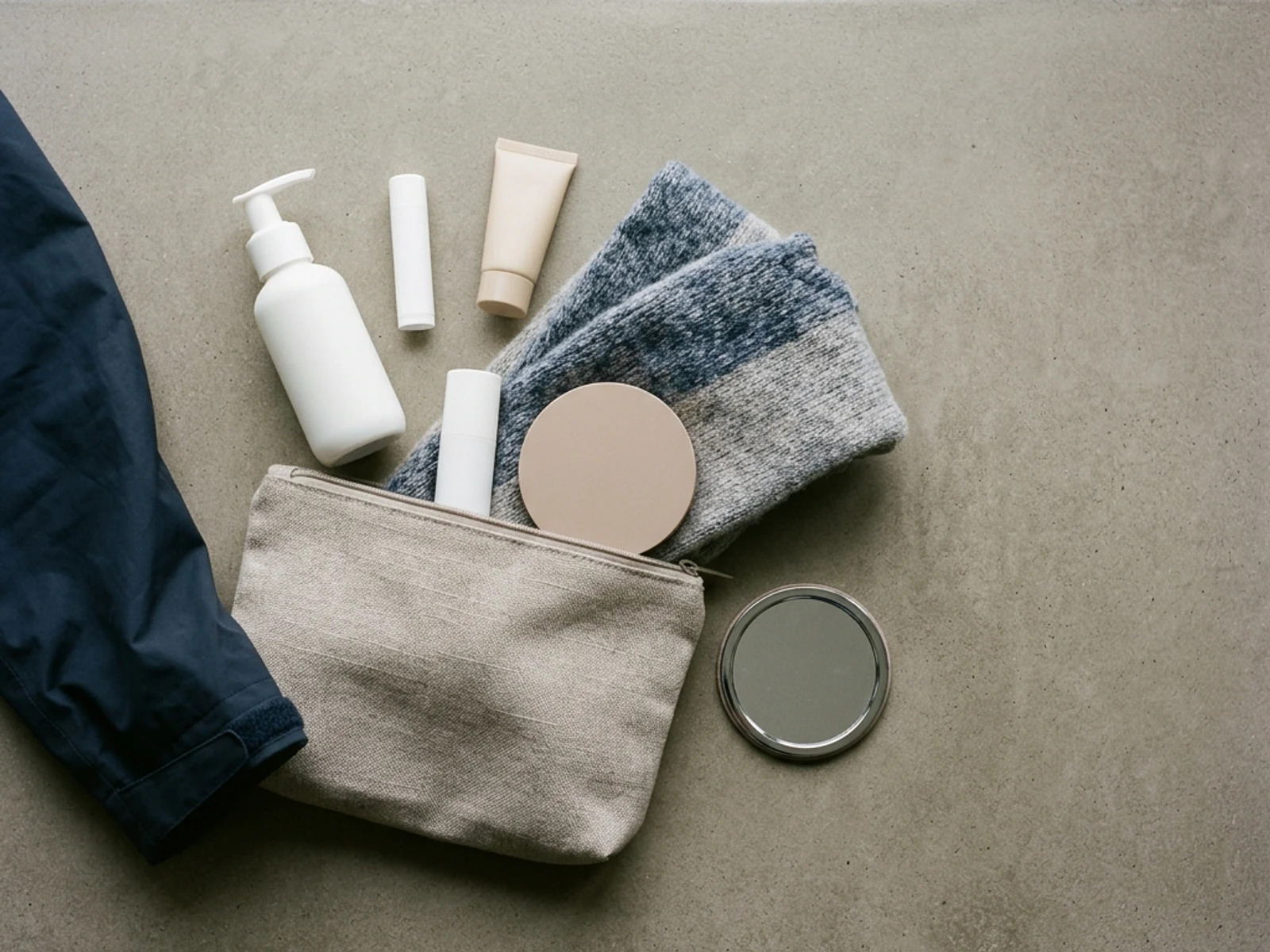
Nail and cuticle guidance is editorial. Cold-season travel may make cuticles look dry, and beach activities can chip standard polish. Hand cream, cuticle oil and a small nail file are useful low-risk categories for many travellers.
If a manicure matters for a wedding, event or beach week, schedule it with enough time before luggage handling, sand, water or travel. A gel manicure may be worth considering for some longer beach trips, but no nail service is necessary or guaranteed to hold through every activity.
Brows, lashes and makeup
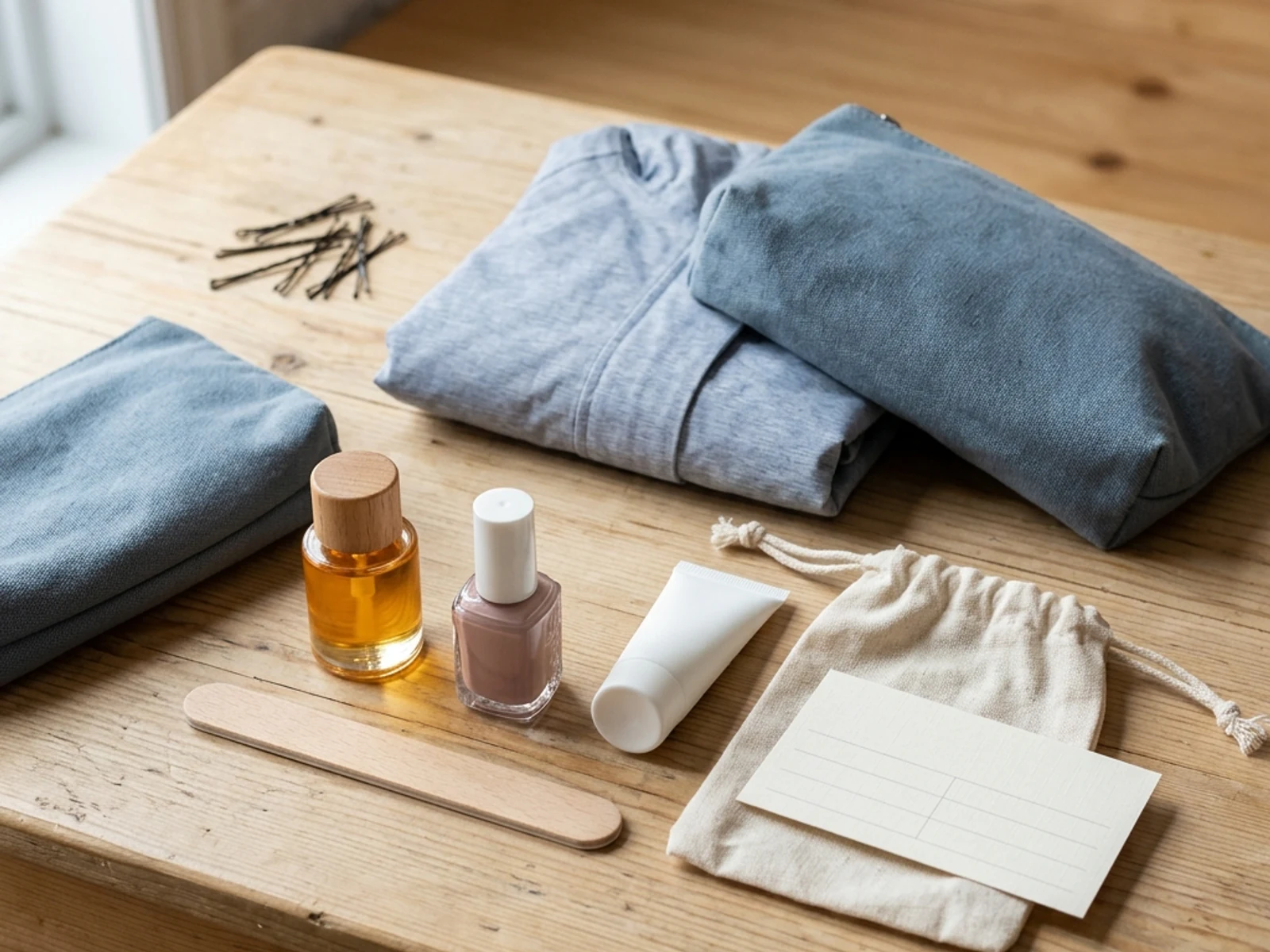
Damp and rainy days. Waterproof mascara and smudge-resistant eye products can be useful optional categories for damp coastal days or spring trips. They should not be described as required.
Wind. Exposed coastal wind can make eyes water and can make loose hair harder to manage. Choose makeup and hair placement with the activity in mind.
Event makeup and styling. For dinners, weddings or indoor events, schedule a blowout or makeup appointment close enough to the event that outdoor transit does not become the main styling challenge.
Lash services. If lash services are part of the plan, follow provider aftercare and avoid scheduling the appointment immediately before damp outdoor activities. For a fuller comparison, see lash lift versus extensions.
What beauty products to pack
This checklist uses categories, not brands. Adjust by destination, season and trip length.
Useful for many travellers:
- Gentle cleanser you already use
- Known moisturizer
- Lip balm
- Hand cream
- Hair ties, clips or pins
- Wide-tooth comb
Season-dependent additions:
- Richer moisturizer for winter and shoulder seasons
- Leave-in conditioner for wind or cold-season travel
- Cuticle oil for colder trips
- Waterproof mascara for damp or rainy days
- Setting spray for summer events if already useful
Region-dependent additions:
- Anti-frizz or smoothing product for damp coastal plans
- Lighter moisturizer texture for warm valley trips
- Extra hair accessories for exposed touring days
Trip-dependent additions:
- Full-size preferred skincare for two-to-four-week stays
- Extra specialty hair products for rural or Cape Breton travel
- Compact tool kit for seasonal stays or relocation
Optional:
- Dry shampoo
- Hydrating hair mask
- Cosmetic SPF if already part of the routine
What to bring from home and what to buy after arrival
| Item type | Bring from home when | Buy after arrival when | Season or region | Notes |
|---|---|---|---|---|
| First-week essentials | Always, especially for rural, late-arrival or event trips | Not recommended | All | Avoid arriving without cleanser, moisturizer and lip balm |
| Preferred shades and specialty products | The exact item matters | Only if an acceptable substitute is easy to find | All | No local availability guarantee |
| Bulky basics | Bring travel sizes | Reasonable in larger communities | Longer stays | Shampoo, conditioner and body wash can be luggage-heavy |
| Weather add-ons | Bring small sizes | Maybe after observing conditions | Coastal, winter, summer events | Optional and itinerary-dependent |
| Tools and accessories | Bring if you have a preference | Replace only if easy | All | Practical, not climate-proof |
For product-category comparisons, the professional versus drugstore haircare article can support decisions without turning this guide into a brand list.
Optional salon services travellers may consider
All salon services in this guide are optional. They are planning tools, not weather remedies.
| Service | Traveller scenario | Possible timing | Season or region | Planning note |
|---|---|---|---|---|
| Blowout | Indoor event, dinner or photography | Close to event | Coastal, spring or summer events | Damp air and wind may affect hold |
| Deep conditioning | Winter stay or longer trip | When convenient | Winter or long stay | Maintenance option, not repair |
| Hair colour | Maintenance appointment | Avoid travel-day timing | All | Leave buffer for provider guidance |
| Manicure | Event, beach trip or maintenance | Allow dry or cure time | All; summer beach trips | Standard polish may chip with activity |
| Pedicure | Summer sandals or event | Before event if useful | Summer | Optional personal-care choice |
| Hydrating facial | Cosmetic service planning | Mid-stay, not rushed | Winter or seasonal stay | Cosmetic category only |
| Brow shaping | Routine maintenance | Follow provider aftercare | All | Standard maintenance |
| Waxing | Beach or event trip | Follow aftercare before sun, water or outdoor exposure | Event or summer | See weather-aware waxing aftercare for details |
Services to schedule carefully
Blowouts and thermal styling. Schedule close to the event if damp coastal walking, fog or wind could affect the style. A contained hairstyle may be better for sightseeing.
Waxing and lash services. Follow provider aftercare before beach days, boat tours or damp outdoor plans. Ask the provider about individual suitability questions.
Colour and nail appointments. Avoid travel-day appointments and leave enough buffer for drying, setting, processing or ordinary aftercare.
Routine by trip length
Weekend. Bring travel-size versions of your core routine, lip balm, hair ties and one weather-aware makeup option if useful. Skip major product changes and salon services unless there is a specific event.
One week. Bring your full daily routine plus one regional add-on, such as leave-in conditioner for a coastal trip or lighter texture for a summer valley visit. A blowout or manicure may make sense only if the itinerary includes an event.
Two to four weeks. Bring preferred specialty products in regular sizes and buy bulky basics after arrival where practical. This length can justify maintenance planning, but appointments should fit the itinerary rather than the arrival day.
For trips in this range, separate daily-use products from event-only products before packing. That keeps the routine easy to repeat and makes it clearer which items are actually helping.
If the trip crosses regions, pack the add-ons by segment rather than by category. Keep coastal hair accessories, event makeup and beach-day nail basics easy to reach only when that part of the itinerary begins.
This is also the point where small routine changes become easier to judge without overcommitting. If a smoothing product, heavier moisturizer or nail-care item is not used during the first half of the stay, it may not need daily-bag space. If an item becomes useful repeatedly, move it into the core kit for the rest of the trip.
Seasonal stay. Adjust product weight as the season changes. Use lighter textures in warmer periods and richer categories in autumn or winter if they suit your routine. Identify local service options for maintenance, but observe before replacing every product.
Long-term relocation. Give yourself at least one full local season before rebuilding your routine. Coastal and sheltered contexts differ, and personal response matters. Build a salon shortlist after choosing the destination region rather than before you understand local routines. Keep notes on what actually changes: whether hair needs more hold, whether skin feels tighter in certain months, whether lips or cuticles need more frequent basic care, and whether a specific salon service is useful for maintenance. Those observations are more reliable than replacing everything before the move.
Province-specific beauty mistakes to avoid
- Treating Halifax as proof for Yarmouth, Greenwood, Sydney or the Northumberland Shore.
- Assuming fog affects the whole province equally.
- Treating salt air as a damage or healing explanation.
- Booking an event blowout without considering damp outdoor transit.
- Packing only lightweight products for a cold coastal trip.
- Overpacking for a weekend instead of bringing trusted basics.
Finding suitable salon services
Use the Nova Scotia salon directory to compare salons by location when the trip includes an event, a long stay or relocation. For a broader explanation of appointment categories, the salon services guide can remain the national supporting resource.
Frequently asked questions
Is Nova Scotia always humid? No. Humidity and humidex context varies by region and station. Halifax, Greenwood and Sydney examples show summer humidex days, while Yarmouth has higher low-visibility hours but fewer humidex days. Plan by destination and season rather than assuming constant province-wide humidity.
Does salt air damage hair in Nova Scotia? This guide does not treat short coastal exposure as a hair-damage explanation. If hair feels different after a coastal day, use ordinary gentle cleansing or conditioning choices already in your routine.
What beauty products should I pack for Cape Breton in autumn? For a Cape Breton autumn trip, consider lip balm, hand cream, a known moisturizer, leave-in conditioner and secure hair accessories. Sydney station examples support precipitation, wind-aware planning and cooling-season context, but they are not a substitute for Cape Breton Highlands-specific conditions.
Should I get a blowout before visiting Peggy’s Cove? A blowout is optional and best suited to an indoor event. Exposed coastal sightseeing can involve dampness, wind and walking, so a contained style is usually more practical for the visit itself.
Can I buy professional haircare in rural Nova Scotia? Availability varies and should not be promised. Bring enough of any product you rely on for the first part of the trip, especially for rural or late-arrival travel, and buy bulky basics after arrival only where practical.
How should I time lash services around humid or wet weather? Follow your provider’s aftercare instructions. If the first days after the service include foggy walks, rain, boat tours or beach time, build in enough buffer before those activities.
Is sunscreen useful in winter outdoor plans? Sunscreen is a general personal-care category for outdoor activity in any season. Include it if it is already part of your routine, but do not frame it as a medical guarantee.
How should I adjust skincare when moving to Nova Scotia? Start with the products you already know and observe a full local season before replacing the whole routine. Coastal, valley and Cape Breton contexts differ, so gradual product-weight changes are safer than a complete reset.
Final practical summary
Nova Scotia beauty travel planning should stay flexible. Pack trusted basics, add one or two region- and season-aware categories, and time optional salon services around actual activities. The most useful adjustment is not a new product list; it is paying attention to whether the trip is coastal, sheltered, warm, damp, windy, short, long or part of a move.
Ready to compare salons?
Move from guide reading into local discovery with service pages, city pages, and featured salon profiles.