
Guide
Scalp Care Guide
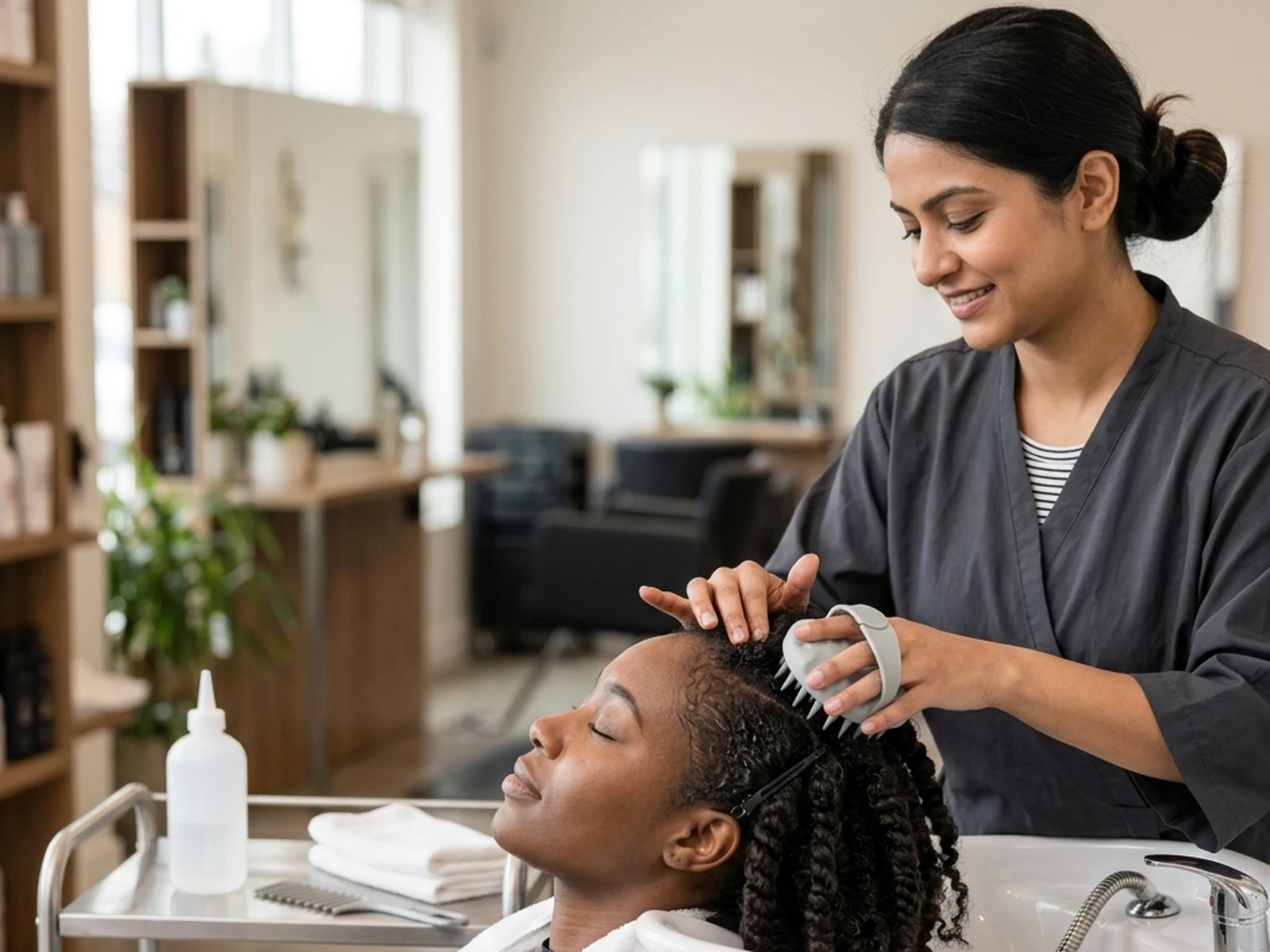
Scalp care is not only about fixing a problem. It can also support healthier hair routines, more comfortable styling, and better long-term service planning. A healthy-feeling scalp often means less irritation during colour or chemical services, easier styling after a wash, and fewer distracting comfort issues between appointments.
This guide covers the basics of scalp care from a salon-service and home-routine perspective. It does not diagnose or treat medical conditions. Persistent, painful, sudden, or otherwise concerning scalp symptoms should be discussed with an appropriate licensed healthcare professional.
Common scalp concerns
Most clients who ask about scalp care are dealing with one or more of these everyday concerns:
Dryness and tightness. The scalp may feel tight, itchy, or rough, especially during Canadian winters when indoor heating reduces humidity and cold outdoor air dries exposed skin. This is a cosmetic comfort observation, not a diagnosis.
Oiliness and flat roots. Some scalps produce more sebum than average, which can make hair look limp or greasy within a day of washing. Product buildup from dry shampoo, heat protectants, and styling sprays can add to the problem.
Flaking. Visible flakes can stem from dryness, product residue, or other causes. Cosmetic flaking that responds to gentle cleansing is different from persistent dandruff or other conditions that may need clinical attention.
Sensitivity and reactivity. Some clients notice tenderness during brushing, discomfort with tight updos, or mild irritation after colour services. Sensitivity can also increase during seasonal transitions.
Buildup. Hard water minerals, silicone-based products, and infrequent clarifying can gradually coat the scalp surface. The result may feel waxy, look dull at the roots, or reduce the effectiveness of regular shampoo.
Understanding which concern applies helps you communicate with a salon and choose the right service format. For a detailed comparison of specific treatment types, see how to choose a scalp treatment in Canada.
What treatments can include
Depending on the salon, scalp appointments may include one or more of the following steps. Not every salon offers every format, and the exact products and tools vary by provider.
| Treatment step | What it involves | Best suited for |
|---|---|---|
| Scalp analysis | Visual or magnified examination of the scalp surface | Understanding the current condition before choosing a service |
| Exfoliation | A scrub or chemical exfoliant applied to the scalp to remove surface buildup | Product buildup, oiliness, or a heavy dry-shampoo routine |
| Massage | Hands or a specialised tool used to apply pressure and movement across the scalp | Tension, relaxation, and general scalp comfort |
| Steam | Warm steam applied to the scalp area to open pores and soften buildup | Complementing exfoliation or hydration steps |
| Product-based therapy | Targeted serums, masks, or balms applied to the scalp and left on for a set time | Dryness, sensitivity, or post-colour calming |
| Cleansing rinse | A final rinse designed to remove treatment residue and leave the scalp feeling clean | Finishing any of the above steps |
A scalp massage is sometimes offered as an add-on to a regular haircut or wash, which makes it easy to try without booking a separate appointment. A more involved scalp detox is usually a standalone service.
Some salons combine scalp care with deep conditioning for the hair shaft, treating the scalp and hair in the same session. Ask what is included so you know whether the service focuses on the scalp, the hair, or both.
Home care notes
Salon scalp treatments are occasional services. Day-to-day scalp comfort depends more on consistent home habits.
Gentle cleansing. Harsh shampoos can strip the scalp, triggering more oil production or increasing dryness. A gentler formula used consistently often produces better comfort than an aggressive wash followed by skipped wash days.
Reducing product buildup. If you use dry shampoo, heat protectants, or heavy styling products regularly, a clarifying shampoo used once every one to two weeks can help prevent surface buildup. This is a general maintenance habit, not a prescription.
Water temperature. Very hot water can feel comforting in cold Canadian weather, but it may contribute to dryness or irritation over time. Lukewarm water during the rinse step is a simple adjustment.
Seasonal adjustment. Canadian climate swings — particularly the shift from humid summer air to dry heated interiors in autumn — can change how the scalp feels. Switching to a slightly more hydrating shampoo or conditioner during the colder months is a common approach. For broader winter haircare context, see the Canadian winter haircare article.
Avoiding self-diagnosis. If a home routine change does not improve comfort within a few weeks, that may be a reason to consult a salon or a healthcare professional rather than adding more products.
Booking questions
Before scheduling a scalp appointment, these questions can help you get the right service and avoid mismatched expectations:
- What does this treatment include? Clarify whether it is a massage, exfoliation, product application, or a combination.
- How long does the appointment last? Scalp services can range from a 15-minute add-on to a full 60-minute session.
- Is this service suited to my concern? A service designed for oily buildup may not be ideal for a dry, sensitive scalp. Mention your main issue during booking.
- Should I wash my hair before or after? Some treatments work best on unwashed hair; others end with a cleansing rinse. The provider’s instructions should guide this.
- How often should I return? Frequency depends on the concern and the service type. Some clients benefit from monthly sessions, while others only book when they notice buildup or discomfort.
- Are there any aftercare steps? Ask whether you should avoid heat styling, heavy products, or certain activities for a period after treatment.
- Can this be added to another appointment? If you are already booking a haircut or colour service, adding a scalp step may save time and integrate the care more naturally.
A good provider should be willing to explain what is included, what outcome you can reasonably expect, and what falls outside the scope of a salon service.
Frequently asked questions
What is a scalp massage?
A scalp massage is a hands-on service where a technician uses their fingers or a tool to apply gentle pressure and movement to the scalp. It is often added to a hair wash, treatment, or standalone booking.
What are the possible benefits of a scalp massage?
Many people book scalp massage for relaxation and scalp comfort. It may also help with scalp circulation and tension. Results vary by person. Always check with your salon or doctor if you have a specific scalp condition.
How often should I book a scalp massage?
Many clients add a scalp massage to their regular hair appointment, or book one monthly as part of a scalp-care routine. How often you go depends on your comfort goals and budget.
Ready to compare salons?
Move from guide reading into local discovery with service pages, city pages, and featured salon profiles.