
Haircare
Hair Extension Aftercare: How to Wash, Brush and Protect Extensions
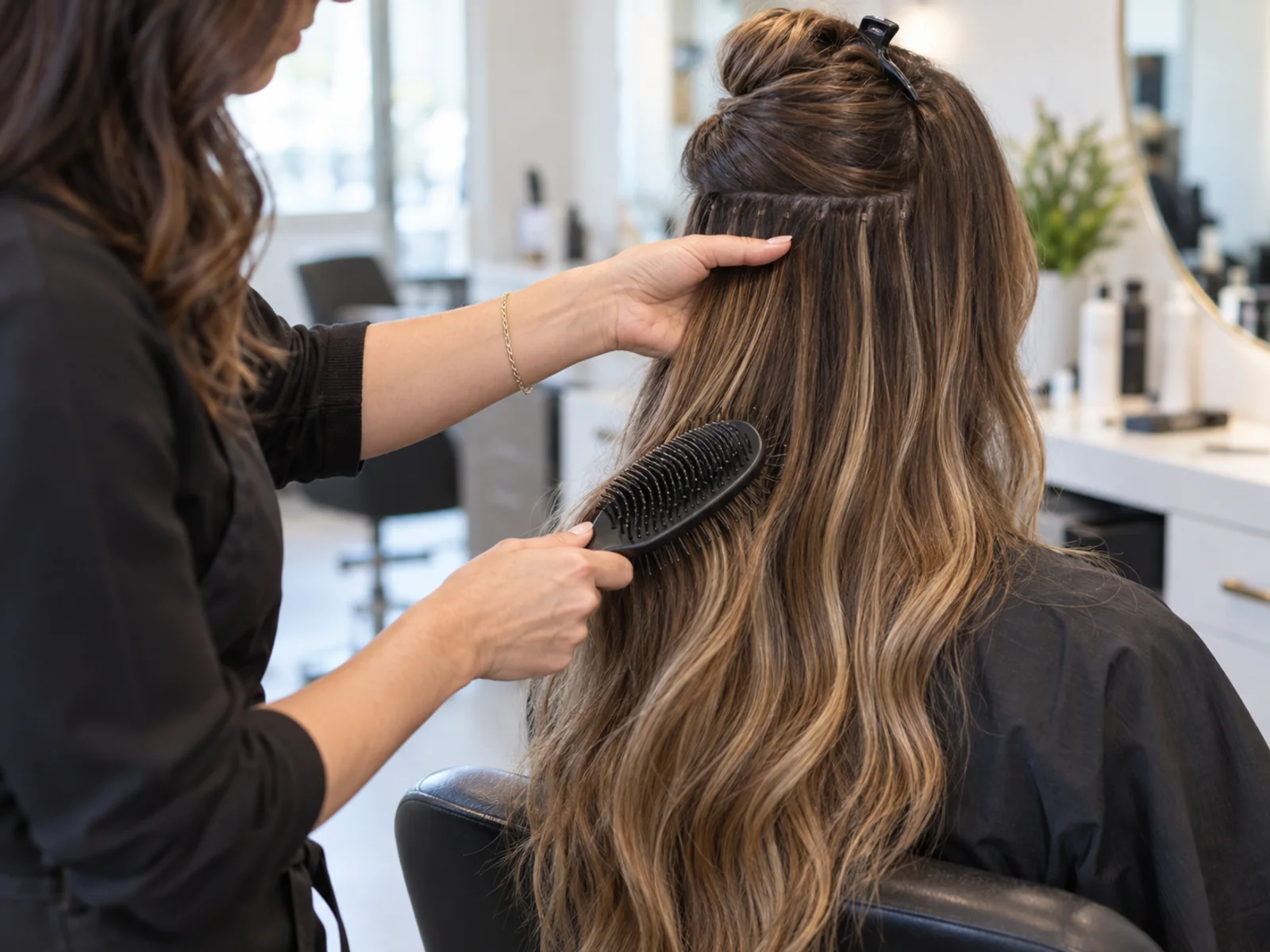
Proper aftercare is a major factor in how long hair extensions last and how natural they look. The details depend on the attachment method — tape-in, keratin or fusion, sew-in, hand-tied weft, micro ring, or clip-in — along with your stylist’s instructions and the manufacturer’s guidance for the installed system.
Several habits apply broadly across many extension types:
- Brush gently, starting from the ends and working upward.
- Support salon-installed attachments while detangling.
- Make sure permanent extensions and their attachment areas are dry before sleeping.
- Follow the washing and product guidance for your specific system.
- Keep conditioner and oils away from attachment points when your system or stylist requires it.
This guide covers common aftercare questions and points out where different extension methods need different approaches.
Why Extension Hair Needs Different Care
Extension hair is no longer connected to a living follicle, so it does not receive scalp oils in the same way as your natural lengths. Human-hair extensions can therefore become dry and tangled over time. Synthetic hair has its own product and heat limitations and should be cared for according to its label.
The attachment points also need method-specific care. Tape adhesive, keratin bonds, weft threads, micro rings, and clips do not all respond the same way to moisture, products, friction, or heat. Good aftercare protects both the extension hair and the connection to your natural hair.
How to Brush Hair Extensions
Brushing helps prevent small tangles from tightening around the attachment area, but technique matters more than following a universal daily count.
Best practices:
- Start at the ends and work upward in small sections. Starting at the roots and pulling through the full length places unnecessary tension on salon-installed attachments.
- Support the hair near the attachment area with your free hand while brushing below it. Do not grip, tug, or press directly on bonds or tapes.
- Use a brush suited to your extension method. A loop brush or an extension-safe soft-bristle brush may work for many systems, but your stylist should recommend a tool that will not catch on your bonds, tapes, wefts, rings, or clips.
- Brush before washing if your system’s instructions allow it, so existing tangles do not tighten when wet.
Brush often enough to keep the hair comfortably detangled, taking your texture, activity, and stylist’s guidance into account. There is no single brushing frequency that is right for every extension wearer.
Can You Brush Extensions When Wet?
This depends on the extension hair, attachment method, and tool. Some systems allow careful detangling on damp hair with an appropriate brush or wide-tooth comb, while others advise waiting until the hair is mostly dry.
If your stylist has approved damp detangling, work slowly from the ends upward and support the hair near the attachment area. Avoid aggressive brushing on soaking-wet hair, which is more vulnerable to stretching and breakage. When in doubt, follow the manufacturer or installer rather than a generic rule.
How to Wash Hair Extensions
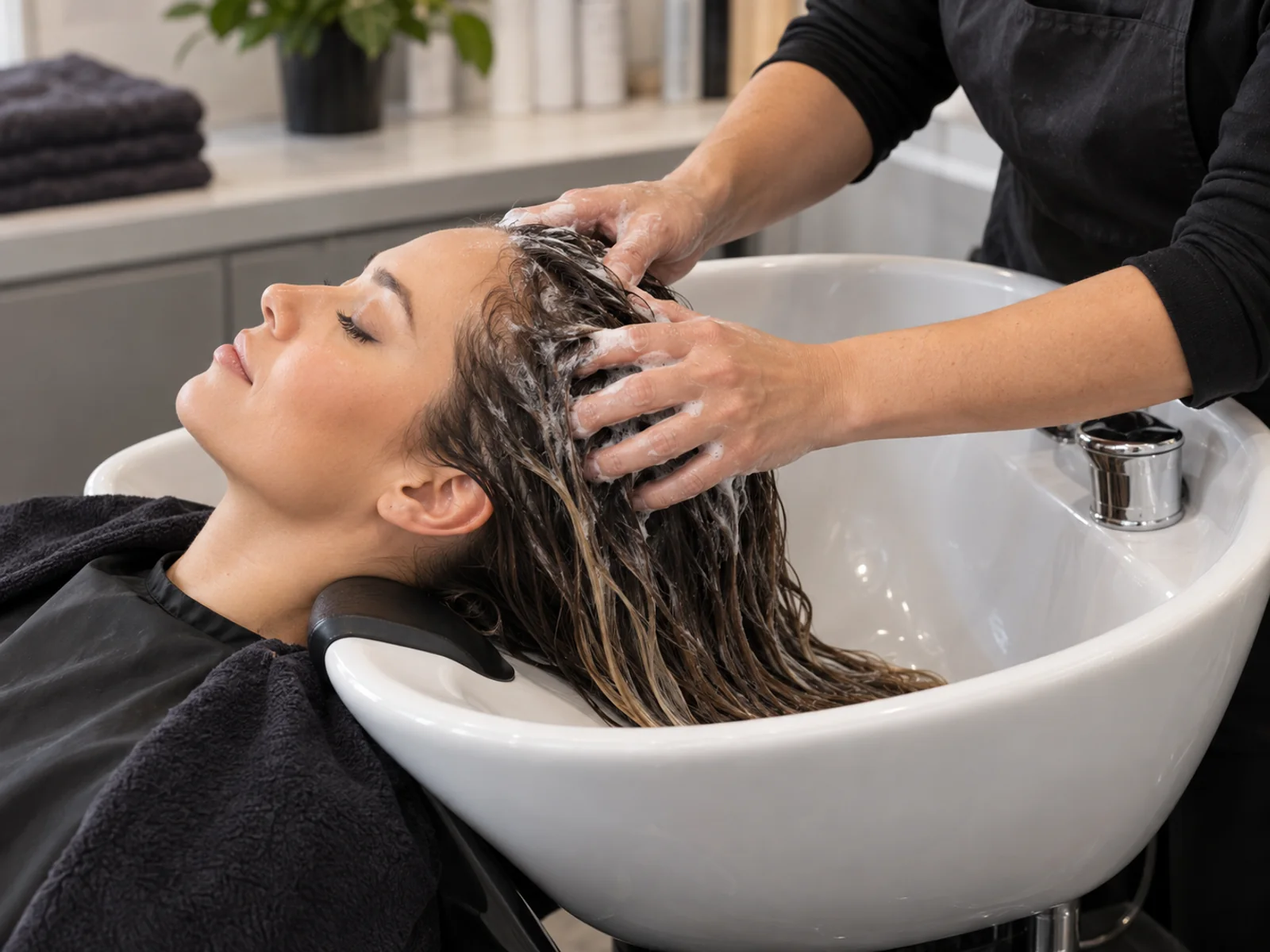
The goal is to clean your scalp and hair without disturbing the attachment points or creating tangles. There is no universal shampoo schedule; use the frequency recommended for your scalp, extension method, and installed system.
General guidelines for many salon-installed systems:
- Brush before showering if that is appropriate for your attachment method.
- Focus shampoo on the scalp. Cleanse gently and allow the lather to move down the lengths instead of piling or vigorously scrubbing the hair.
- Use smooth motions rather than circular rubbing around attachment areas, where friction can encourage tangling.
- Place conditioner according to your system’s instructions. Many tape and bonded systems require conditioner to stay on the mid-lengths and ends, away from adhesive or bonds. Sew-ins, rings, clip-ins, and other methods may have different needs.
- Rinse thoroughly. Product buildup around attachments can contribute to slippage or matting in some systems.
For permanent extensions, two to three washes per week is a common recommendation from some manufacturers, while clip-ins may need washing only after multiple wears. These are examples, not rules: scalp needs, activity, hair type, product use, and manufacturer instructions can change the schedule.
For tape-in extensions specifically, see the detailed guide to sulfate-free shampoo for tape-in extensions.
Do Extensions Need Sulfate-Free Shampoo?
Sulfate-free shampoo is widely recommended for some extension systems, particularly tape-ins, to avoid overly stripping the extension hair and to meet the requirements of certain adhesives. It is not a universal rule for every attachment method or brand.
Follow the product guidance from your stylist and the manufacturer of your installed system. If no formula was specified, ask before switching products. The word “sulfate-free” alone does not guarantee that every shampoo is compatible with every extension system.
How Should You Dry Hair Extensions?
Drying advice also varies by method, but a few handling principles are broadly useful:
- Gently squeeze excess water from the lengths with a soft towel. Do not wring, twist, or rub the hair into a tangle.
- Pat around attachment areas carefully rather than rubbing them.
- Dry the attachment area as your system requires. Some salon-installed systems should not remain damp for long, so do not assume that full air-drying is always the safest choice.
- If blow-drying is allowed, use controlled airflow and a heat level suited to the hair. Keep concentrated high heat away from tape adhesive, keratin bonds, and any attachment the manufacturer identifies as heat-sensitive.
Before bed, make sure permanent extensions and the attachment area are fully dry. Sleeping with damp salon-installed extensions can contribute to matting and attachment problems.
Can You Sleep With Hair Extensions?
Yes, permanent extensions are designed to be worn overnight, but preparation depends on the method. Clip-ins are normally removed according to their product instructions.
- Make sure salon-installed extensions are dry before sleeping.
- Secure the lengths only if your stylist recommends it. A loose, low braid can reduce friction for many long-hair systems, while tight elastics or styles that pull on attachments should be avoided.
- Consider a silk or satin pillowcase. Some wearers find that a smoother surface reduces friction and tangling, though results vary.
The goal is to limit friction and tension without placing a universal sleep style on every attachment method.
Can You Use Heat on Hair Extensions?
Many human-hair extensions can be heat-styled, but the permitted heat and tool placement depend on the hair and attachments.
- Use a compatible heat protectant on the lengths if the manufacturer allows it.
- Keep hot tools away from attachment points. Direct heat may soften some keratin bonds or tape adhesives. Do not clamp a flat iron over a bond, tape tab, ring, thread, or clip.
- Do not default to the highest heat setting. Extension hair may have a different processing history from your natural hair. Follow the supplier’s limit and use the lowest effective setting.
- Do not heat-style synthetic extensions unless the label specifically says they are heat-resistant and gives an allowed temperature range.
Ask your stylist or extension manufacturer when the heat tolerance is unclear.
Can You Swim With Hair Extensions?
Swimming rules vary by installation. Chlorinated and salt water can dry extension hair, encourage tangling, or affect some attachment systems, so confirm the correct routine with your stylist before swimming.
If swimming is allowed for your system:
- Wet the lengths with fresh water first if the manufacturer recommends it.
- Apply any approved protective product only where your system permits, usually away from attachment points.
- Secure long hair in the method your stylist recommends to reduce tangling.
- Rinse promptly with fresh water afterwards.
- Condition only the permitted areas and dry the attachment area as directed.
Swimming does not automatically ruin every extension system, but repeated exposure without the right system-specific care can shorten the life of the hair or attachments.
What Products Should You Avoid?
There is no ingredient blacklist that applies identically to every extension method. Product compatibility and placement matter.
- Keep oils, serums, and conditioner away from tape or bonded attachment points when instructed. Lubricating or conditioning products near some attachments can contribute to slippage or premature failure.
- Use silicone products according to the manufacturer’s guidance. Certain formulas may create buildup near some attachment systems, while others are permitted on the lengths.
- Check both the cleanser and styling products. Dry shampoo, masks, sprays, and leave-ins can build up if applied directly over bonds, tapes, rings, or wefts.
It is inaccurate to say that oils, silicones, or sulfates are universally bad for all extensions. Follow the guidance for your installed system and keep products in the areas your stylist recommends.
How Often Do Extensions Need Maintenance?
Maintenance depends on the method, growth rate, attachment placement, and manufacturer. Typical ranges often discussed by salons include:
| Extension type | Example maintenance pattern |
|---|---|
| Tape-in | Repositioning is often discussed around 4 to 8 weeks |
| Keratin/fusion | Wear periods are often discussed in months rather than weeks |
| Sew-in or weft | Tightening or move-up appointments are often discussed around 6 to 8 weeks |
| Hand-tied weft | Move-up timing is commonly discussed around 6 to 8 weeks |
| Clip-in | Removed after wear; no salon move-up schedule |
These are broad examples, not booking instructions or guarantees. Your stylist should set the schedule for the exact system installed and may recommend an earlier appointment if attachments slip, mat, or become uncomfortable.
Tape-in wearers can also read what happens during professional tape-in extension removal and reapplication.
Warning Signs You Should Contact Your Stylist
Contact your stylist if you notice:
- Unexpected slippage or extensions detaching ahead of the expected schedule
- Matting near the roots that you cannot gently detangle
- Persistent pulling, tightness, soreness, or discomfort around the attachments
- Exposed or shifted attachment points as the hair grows
- Severe tangling that does not respond to careful brushing with the approved tool
- Unusual breakage close to the attachment area
Do not pull on matted or slipping extensions or try to remove bonded systems without appropriate training and products. A stylist can assess whether the installation needs adjustment or removal.
This article does not diagnose hair-loss or scalp conditions. If you notice thinning, shedding from the root, skin changes, or symptoms that may not be related to normal extension maintenance, speak with a healthcare provider or dermatologist.
Frequently Asked Questions
Can I sleep with my extensions wet?
Do not sleep with wet salon-installed extensions unless the manufacturer and stylist explicitly say your system permits it. Damp hair and attachment areas can mat or fail prematurely. Dry them using the method recommended for your installation before bed.
How often should I wash my hair with extensions?
There is no universal schedule. Two to three times per week is a common guideline for some salon-installed systems, while clip-ins may be washed only after multiple wears. Your scalp, lifestyle, hair type, attachment method, and manufacturer instructions determine the right frequency.
Do I have to use a special brush?
Use a brush that will not catch or pull on your attachment type. A loop brush or extension-safe soft-bristle brush suits many systems, but not every one. Ask your stylist which tool and technique are approved for your installation.
What happens if I get conditioner on the bonds?
On some tape and bonded systems, conditioner near the attachment can contribute to softening, slippage, or premature failure. Rinse it thoroughly without tugging, then follow your stylist’s placement guidance. Other attachment methods may have different rules.
Can I use dry shampoo with extensions?
Some systems allow dry shampoo between washes, but avoid spraying it directly onto attachment points unless the manufacturer approves that use. Apply it sparingly and remove buildup through the normal system-specific wash routine.
How long do hair extensions last?
Lifespan varies widely by method, hair quality, installation, wear, and aftercare. The hair may last through more than one maintenance cycle in some reusable systems, while other attachments are worn once. Ask your stylist about the expected maintenance and replacement schedule for the exact hair and method you purchased.
Can I dye or colour my extensions?
Some human-hair extensions can be coloured by a professional, but their processing history and response may differ from your natural hair. Lightening can be particularly risky, and synthetic hair should not be treated like human hair. Check with the supplier and stylist before applying colour.
Do extensions damage my natural hair?
Any extension system can cause damage if its weight, tension, placement, removal, or maintenance is unsuitable. Professional installation and timely maintenance can reduce risk but cannot guarantee that damage will never occur. Contact the stylist promptly if you feel persistent tension or notice breakage, thinning, or scalp discomfort.
Find Hair Extension Services Near You
Looking for a salon that specialises in hair extension installation and maintenance? Browse hair salons across Canada to find extension professionals near you. Check each salon’s listed services and availability before booking.
Need a salon after reading?
Use the directory, local pages, and service hubs to compare salons in Canada with more confidence.