
Problem Solving
Salon Treatments for Frizzy Hair in Canada
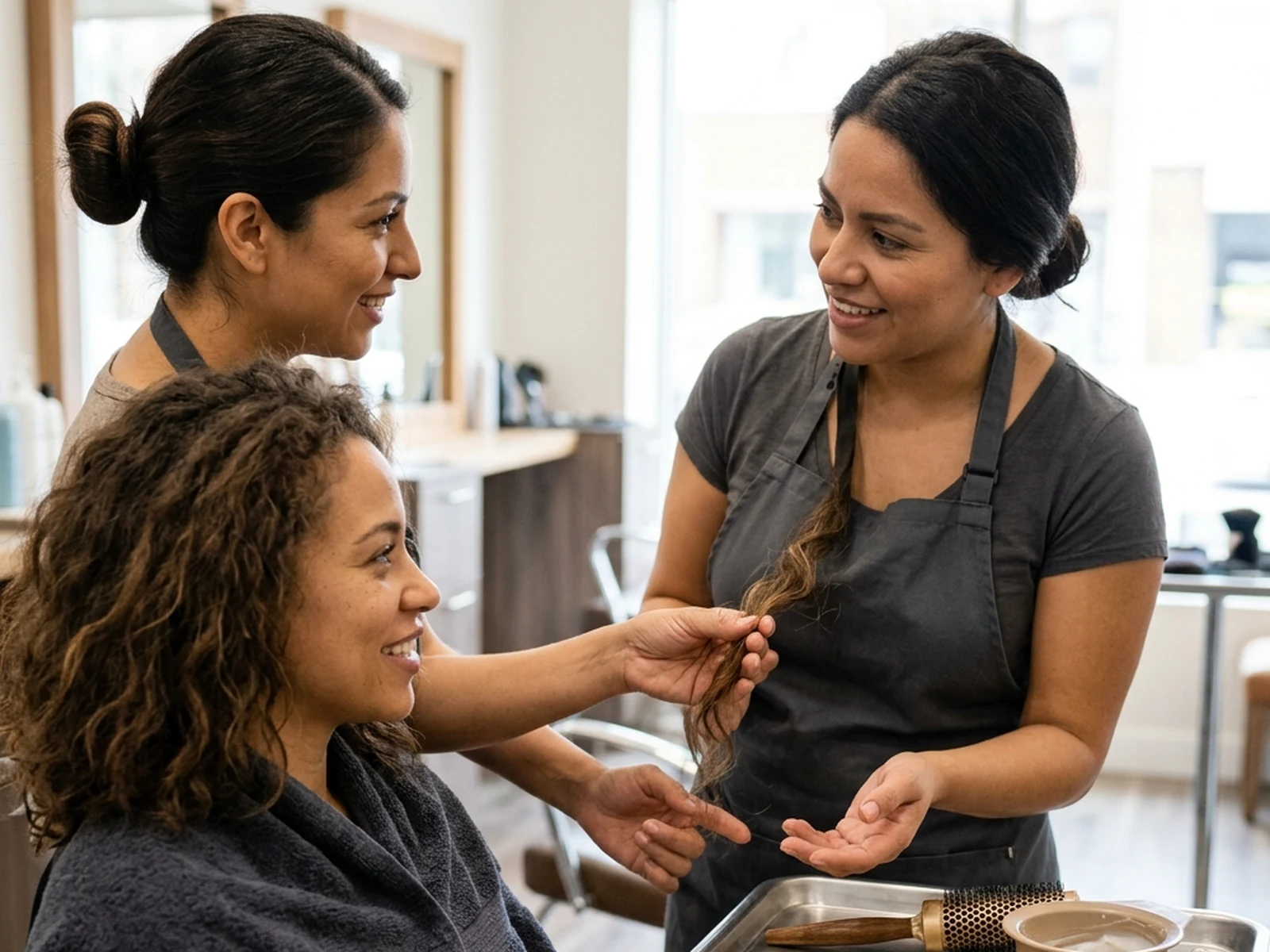
Frizz is one of the most common reasons clients walk into a Canadian salon asking for help. But the right treatment depends on what is causing the frizz, how much commitment you want, and what results are realistic for your hair type. A single high-cost service is not always the answer — sometimes a combination of cut, moisture support, and better home care produces a more sustainable result.
Understanding why your hair frizzes
Before choosing a treatment, it helps to understand the underlying cause. Different types of frizz respond to different services:
Humidity-induced frizz. Hair absorbs moisture from humid air, causing the cuticle to swell unevenly. This is especially common in Southern Ontario and Atlantic Canada during summer months, and on the BC coast during rainy seasons.
Damage-related frizz. Heat styling, chemical processing (colour, bleach, perms), and rough handling can permanently damage the hair cuticle. Damaged cuticles do not lie flat, creating constant frizz regardless of weather.
Dryness-related frizz. Hair that lacks internal moisture reaches out for moisture in the air, creating flyaways and a halo of frizz. This is common in Canadian winters when indoor heating strips humidity from the air.
Texture-related frizz. Curly, coarse, and multi-textured hair types have cuticles that are naturally more lifted. This is not damage — it is hair structure. Working with the texture rather than against it often produces the best results.
Salon treatment comparison
| Treatment | How it works | Duration | Maintenance | Best for | Approximate cost |
|---|---|---|---|---|---|
| Keratin treatment | Protein formula sealed with a flat iron smooths the cuticle and reduces frizz | 2 to 4 months | Sulfate-free shampoo; avoid water for 24 to 72 hours after | Persistent frizz; clients who want a significant reduction in styling time | $200 to $500+ |
| Hair botox | Conditioning treatment that coats the hair shaft to reduce frizz and add shine, without restructuring | 4 to 8 weeks | Gentler aftercare than keratin; fewer product restrictions | Mild to moderate frizz; clients wanting conditioning without chemical restructuring | $150 to $350 |
| Deep conditioning | Intensive moisture treatment applied and processed with heat | Temporary, until the next wash | No special maintenance | Dryness-related frizz; seasonal moisture support | $30 to $80 |
| Blowout | Heat styling with a round brush to create temporary smoothness | 2 to 5 days | Protect overnight; avoid humidity exposure | Short-term smoothness for events or weekly maintenance | $40 to $80 |
| Professional haircut | A well-shaped cut reduces bulk and allows hair to sit with less resistance | Until the next cut | Regular trims every 6 to 10 weeks | Texture-related frizz caused by excess weight or uneven layers | $50 to $120 |
Keratin treatments in detail
Keratin treatments are the most popular salon frizz service in Canada. They work by infusing the hair with a protein formula and sealing it with heat, creating a smoother cuticle surface.
What to know before booking:
- Some keratin formulations contain formaldehyde or formaldehyde-releasing ingredients. Ask the salon specifically what system they use and how they ventilate the space during application.
- Results depend on hair type. Very curly hair will become smoother and more manageable, but it may not become pin-straight. Set realistic expectations with your stylist.
- Aftercare is critical. Most keratin treatments require sulfate-free shampoo, no washing for the first 24 to 72 hours, and avoiding ponytails or hair clips during the initial setting period.
- The treatment fades gradually. It does not create a harsh grow-out line like a chemical relaxer would.
For a broader comparison of smoothing options, see the smooth hair guide.
Hair botox vs. keratin
These two treatments are often confused, but they work differently:
- Keratin restructures the hair by creating a protein barrier over the cuticle. It produces stronger frizz reduction and lasts longer, but involves more chemicals and stricter aftercare.
- Hair botox is primarily a conditioning treatment. It does not contain the same restructuring agents and is generally gentler. The frizz reduction is less dramatic but the conditioning benefit is immediate.
If you are unsure which to choose, hair botox is a lower-risk starting point. If the conditioning alone does not address your frizz sufficiently, a keratin treatment may be the next step.
When a haircut is the best frizz treatment
Sometimes the most effective frizz service is not a chemical treatment at all. A skilled stylist can significantly reduce frizz by:
- Removing excess bulk from thick or dense hair, allowing it to dry with less puffiness
- Creating internal layers that reduce weight without sacrificing length
- Cutting with the natural texture rather than against it, so the hair falls into a smoother shape
If your frizz is primarily texture-related rather than damage-related, investing in a great cut and a simpler product routine may produce better long-term results than repeated smoothing treatments.
Home care to support salon treatments
Salon frizz treatments last longer when the home routine reinforces the result:
- Use sulfate-free shampoo after keratin or smoothing treatments. The sulfate-free shampoo guide explains what to look for.
- Apply a leave-in conditioner or lightweight oil to damp hair before drying. This adds a moisture barrier that helps resist humidity.
- Dry gently. Avoid vigorous towel drying. Squeeze water out with a microfibre towel, then air dry or use a diffuser on low heat.
- Reduce heat styling frequency. If heat damage is contributing to frizz, every heat pass makes it worse. Try air drying or using lower heat settings.
- Adjust for the season. Use richer, more hydrating products in dry Canadian winters and lighter formulas in humid summer months.
Frequently asked questions
Can a single salon treatment permanently eliminate frizz?
No. All salon frizz treatments are temporary. Keratin treatments last the longest (2 to 4 months), but they fade over time. The hair that grows in after treatment is untreated, so the frizz returns gradually. Ongoing management through a combination of services and home care is more realistic than expecting a permanent fix.
Is keratin treatment safe for coloured hair?
Keratin treatments can be applied to coloured hair, but timing matters. Most stylists recommend waiting at least two weeks after a colour service before applying keratin. The keratin process may slightly shift the colour tone, so discuss this with your colourist.
What is the best treatment for winter frizz in Canada?
Winter frizz in Canada is usually caused by dryness and static from indoor heating. A deep conditioning treatment can help, combined with a more hydrating home routine. Keratin treatments are typically more suited to humidity-related frizz, though they can benefit dry hair too.
Frequently asked questions
What salon treatments can help with frizzy hair?
Frizz support often includes smoothing treatments, tailored hydration, bond repair, careful cutting, and more precise at-home product recommendations. A scalp or texture consultation can help narrow the right option.
Need a salon after reading?
Use the directory, local pages, and service hubs to compare salons in Canada with more confidence.