
Guide
Newfoundland and Labrador Beauty Travel Guide: Coastal Climate, Regional Packing and Salon Planning
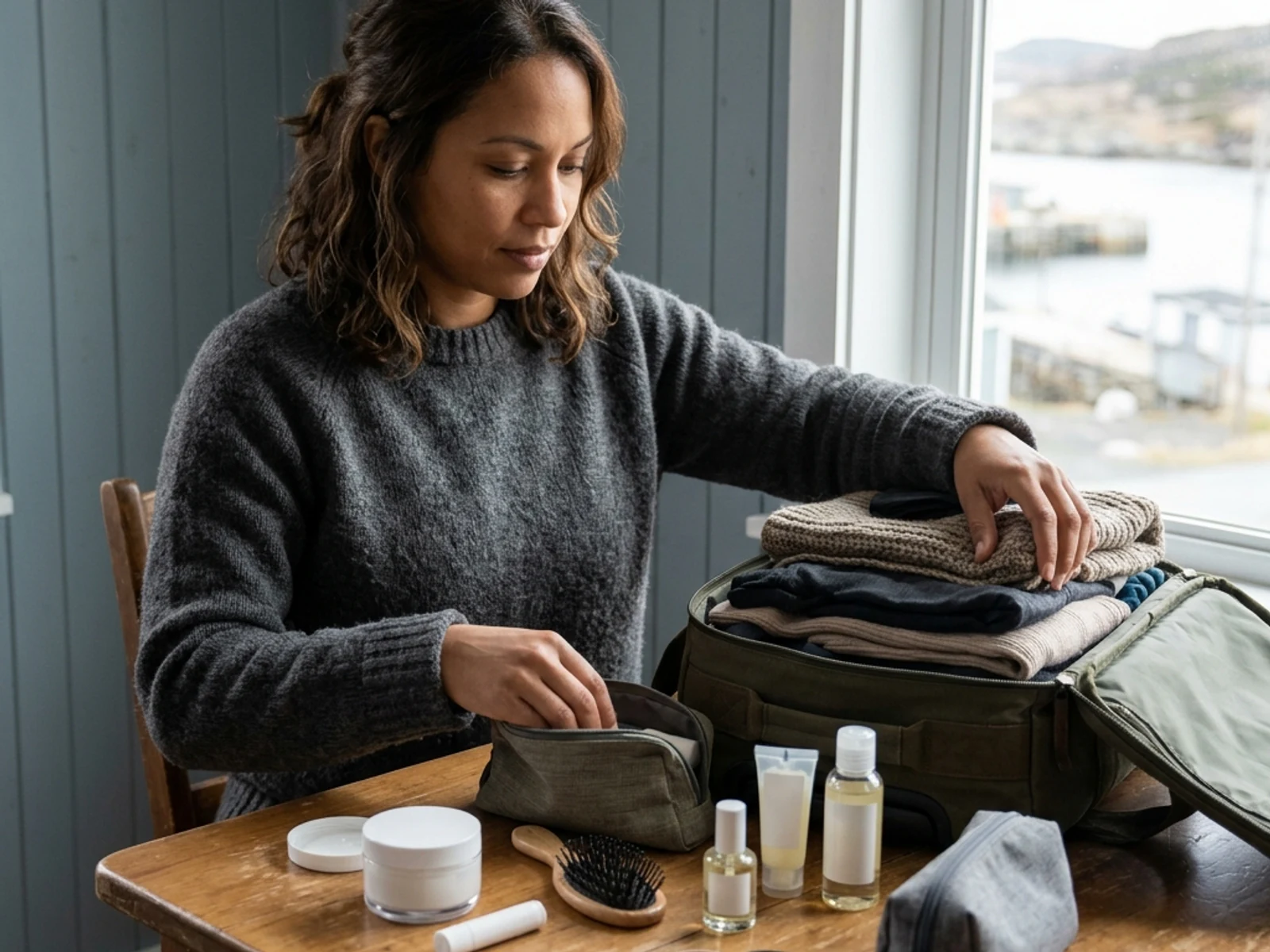
Newfoundland and Labrador is not one uniform beauty-planning destination. A short stay on the Avalon Peninsula, a central Island road trip, a western Newfoundland visit and a Labrador winter move can call for different packing, styling and appointment decisions. The most useful plan is flexible: bring products you know, adjust by region and season, and time salon services around activities rather than assuming the weather requires them.
What to decide first
Before changing products or booking appointments, decide where you will be, when you will be there and how long you will stay. Those three choices matter more than a single province-wide rule.
A weekend in St. John’s in early summer may involve different styling expectations from a two-week stay in central Newfoundland. Labrador station examples support much colder winter planning than many Island examples. Central Island examples can be warmer in summer and colder in winter than the eastern coast. Avalon and eastern Island examples can support low-visibility or fog-aware planning, but that wording should not be carried across the whole province.
For most travellers, the safest approach is to pack a simple routine first. Bring preferred products when replacements would be inconvenient, especially for smaller-community, remote or Labrador travel. Then observe the destination before changing a full routine. Short visits rarely justify major product changes. Longer stays and relocations give you time to compare salons, test what is easy to buy locally and decide whether a service is worth scheduling.
Seasonal beauty planning
Use this table as a planning guide, not a promise for a specific trip day. The regional notes are based on approved station examples and should stay qualified.
| Season | Months | Regional variation | Hair and scalp planning | Skin, lips and nails | Makeup and service timing |
|---|---|---|---|---|---|
| Winter | December-April | Labrador and some inland or northern examples are colder for longer; Island examples still show winter snow, wind and precipitation | Static-aware styling, leave-in conditioner and styles that work under hats or hoods may be useful | Richer moisturizer, lip balm, hand cream and cuticle oil can be practical | Keep makeup simple for outdoor transitions; schedule services around travel days and winter gear |
| Spring | April-June | Avalon and eastern examples can stay cool and show high low-visibility hours; Labrador warms later than many Island examples | Flexible styles, clips and rain-aware styling help when mornings are damp or wet | Layered skin care and lip balm keep the kit simple | Water-resistant makeup categories may be useful for outdoor events, with no wear guarantee |
| Summer | July-August | St. John’s coastal summer highs are moderate by station example; central and some western examples can be warmer; Labrador examples remain cooler | Light styling, travel brush, clips and anti-frizz product for damp plans | Sunscreen is a standard outdoor packing category; lighter moisturizer may suit warmer days | Time blowouts and makeup close to indoor events; keep a backup style for coastal touring |
| Autumn | September-November | Temperatures cool; precipitation and wind-aware planning remain relevant in station examples | Transition toward richer conditioners and flexible styles | Hand cream, lip balm and cuticle care become more useful again | Avoid building service timing around unsupported storm claims; plan around the itinerary |
How regions differ
Avalon Peninsula and eastern Island
St. John’s Airport is useful as an Avalon and eastern Island example. It records high hours with visibility below 1 km in spring and early summer, and eastern station examples support wind-aware planning. Island station examples also record precipitation in every month, so flexible hair and makeup expectations are practical for outdoor touring.
This does not mean all of Newfoundland and Labrador is foggy, wet or windy in the same way. St. John’s should not stand in for the whole province. Use Avalon and eastern-coast wording only when the destination fits that region.
For hair, this means a fresh loose style may need a backup plan on a damp or low-visibility day. For makeup, simple eye makeup, a compact touch-up kit and optional water-resistant categories can be more practical than a complex look. For events, a blowout works best as an optional appointment timed close to an indoor occasion, not as a guarantee against weather.
Central Newfoundland
Central Island station examples such as Gander support a different comparison: warmer summer daytime highs and colder winter lows than St. John’s. That contrast matters for travellers who are moving between coastal and more sheltered or interior stops.
In summer, a lighter moisturizer or lighter styling product may feel more comfortable for some travellers. In winter, indoor heating and colder outdoor conditions may make richer moisturizer, hand cream, lip balm and static-aware hair products more useful. These are still station-based examples, not a rule for every central community.
Western Newfoundland and the Northern Peninsula
Corner Brook, St. Anthony and related western or northern examples support colder or snowier winter planning than a mild coastal assumption would suggest. They also remind the writer and reader not to turn “coastal Newfoundland” into one simple climate label.
Western and northern trips can include outdoor touring, luggage handling, wind exposure, winter gear and changing indoor conditions. A contained hairstyle, travel brush, lip balm, hand cream and nail file are low-risk additions. If the trip includes events, service timing should account for driving, weather changes and activity plans.
Labrador
Labrador station examples, including Goose, Cartwright, Nain and Wabush, are substantially colder in winter than St. John’s and many Island examples. Labrador travel also needs more careful packing because the destination can be farther from larger shopping choices and because winter conditions can make product replacement less convenient.
Do not treat Labrador as one uniform region. Labrador coast and Labrador interior examples can differ, and the guide should avoid implying that one station represents all Labrador communities. What remains safe is the broad practical rule: Labrador winter travel usually deserves a more winter-focused beauty kit than an Avalon summer weekend.
Avalon fog or low-visibility wording does not apply to Labrador. Labrador planning should focus on colder-station examples, wind-chill planning where supported, longer cold-season routines, product familiarity and appointment timing around travel logistics.
Coastal and more sheltered planning
Coastal and sheltered differences are useful only when written as cautious comparisons. Eastern or exposed examples can make wind-aware hair, rain preparation and compact makeup planning more useful. Central or more sheltered examples can create warmer summer and colder winter contrasts compared with St. John’s.
For a coastal day, think about containment: braids, clips, low buns, a travel brush and a small makeup kit. For a central or longer-stay visit, think about adjustment: observe whether your cleanser, moisturizer and styling products still feel right after a few days. For Labrador or remote travel, think about replacement risk: bring products that would be difficult to substitute.
These are planning differences, not predictions. A station normal cannot tell you what a specific Saturday will feel like, and a coastal label should not be used as proof that every community has identical conditions.
If you are arriving from another climate
| Arriving from | What may feel different | Practical adjustment |
|---|---|---|
| A more humid region | Winter indoor air or colder interior conditions may feel drier than expected | Keep a familiar moisturizer and leave-in conditioner available; observe before switching products |
| A drier region | Avalon or eastern dampness and Island precipitation may affect styling expectations | Pack clips, a travel brush and an optional anti-frizz product; avoid relying on a perfect blowout for outdoor plans |
| A warmer region | Labrador winter and colder inland examples can feel like a larger adjustment | Bring richer moisturizer, lip balm, hand cream, cuticle oil and static-aware hair products |
| A colder region | Island summer may feel moderate, while Labrador summer remains cooler | Use a lighter routine for warmer Island days, but keep outdoor sunscreen and flexible hair basics |
| Another coastal region | Coastal conditions may feel familiar, but Avalon low-visibility patterns are specific | Time event hair and makeup around local plans instead of assuming all coasts behave alike |
| An inland region | Wind, precipitation and low-visibility coastal examples may be less familiar | Pack contained hairstyle options and a compact rain-aware makeup plan |
Hair care by region and season
Winter hair planning should stay practical. Indoor heating can contribute to dry-feeling indoor air, and hair may feel more static-prone during winter routines. A leave-in conditioner, a smoothing product category or a gentler wash rhythm may be worth considering, but no product is required. Hats, hoods and scarves can affect styled hair, so a style that survives winter layers may be more useful than a polished loose finish.
For more detailed winter product strategy, use the winter haircare guide rather than repeating a full national winter routine inside this province guide.
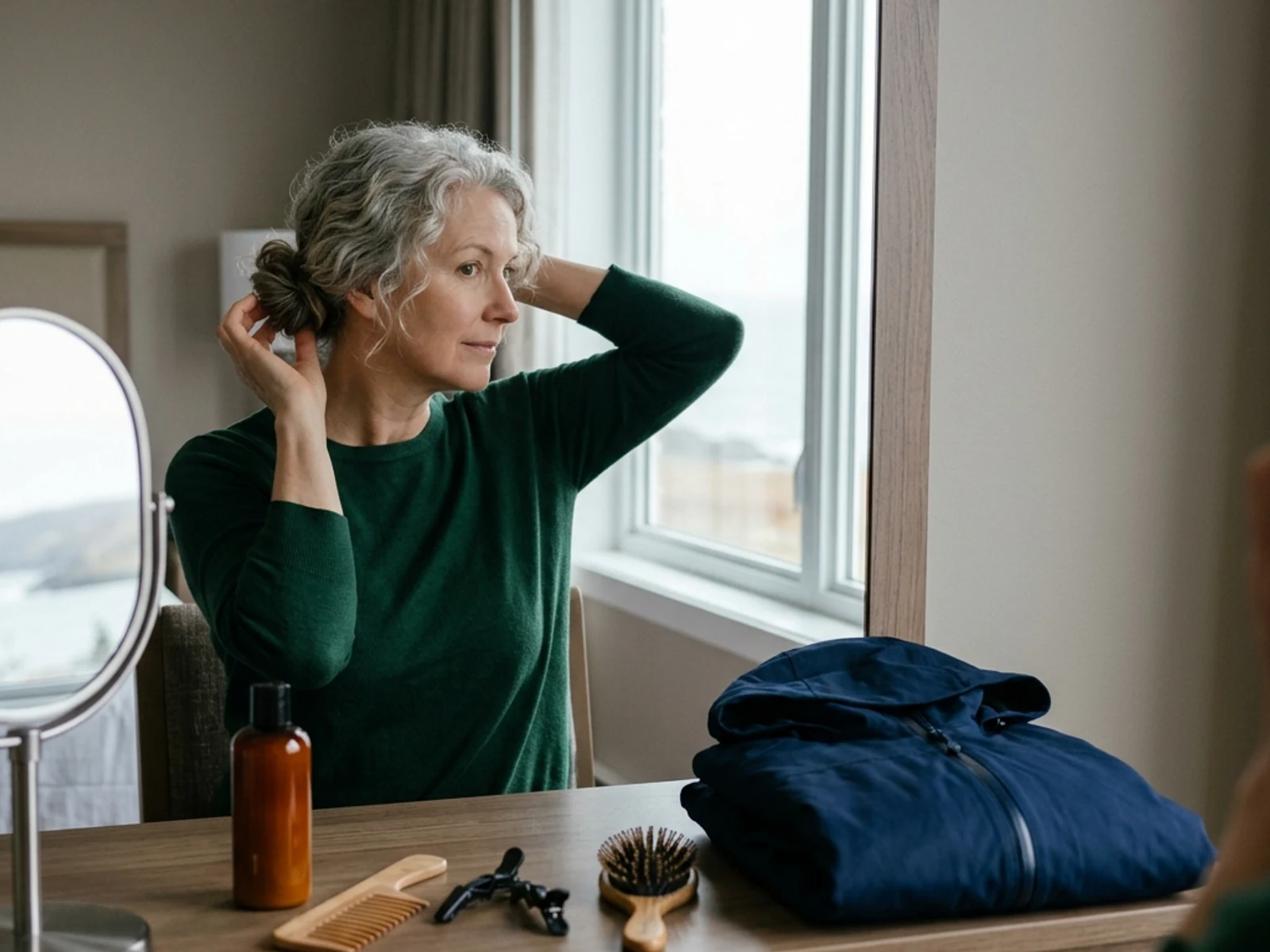
Spring and early summer on the Avalon or eastern coast should be written with low-visibility and damp-planning limits. Damp or wet conditions may affect how long a styled finish holds. A braid, clip-secured style or low bun can be easier for sightseeing than a heat-styled look that depends on dry conditions.
Summer planning differs by region. Coastal Island examples such as St. John’s are moderate by station example, while central and some western examples can be warmer. For coastal touring, hair ties, clips and a travel brush are useful. For warmer central stops, lighter styling products may feel better. For Labrador, avoid assuming Island summer warmth.
If frizz, smoothing or salon options matter for a longer stay, link out rather than duplicating specialist advice. The salon options for frizz article covers national service categories; this guide should only explain destination timing.
Cosmetic scalp comfort
Cosmetic scalp planning should stay conservative. Some travellers may notice oily-looking roots in warmer or humid-feeling periods. Others may notice dry-feeling scalp during winter indoor-heating routines. The best first step is observation: wait to see how your normal wash timing and products feel in the destination before changing everything.
For a longer stay, a salon consultation can be useful if you want routine guidance, but the guide should not suggest diagnosis or condition-specific care. Provider-led cosmetic scalp services are optional. The cosmetic scalp-care planning guide is the better place for broader cosmetic service questions.
Skin and lip routine adjustments
Winter skin planning is strongest where the brief supports cold, wind-chill examples and indoor-heating context. Skin may feel dry or tight during indoor-heating routines, and a richer moisturizer may be useful for winter, Labrador or longer stays. Lips may look or feel chapped in cold or windy conditions, so non-medicated lip balm is a practical item.
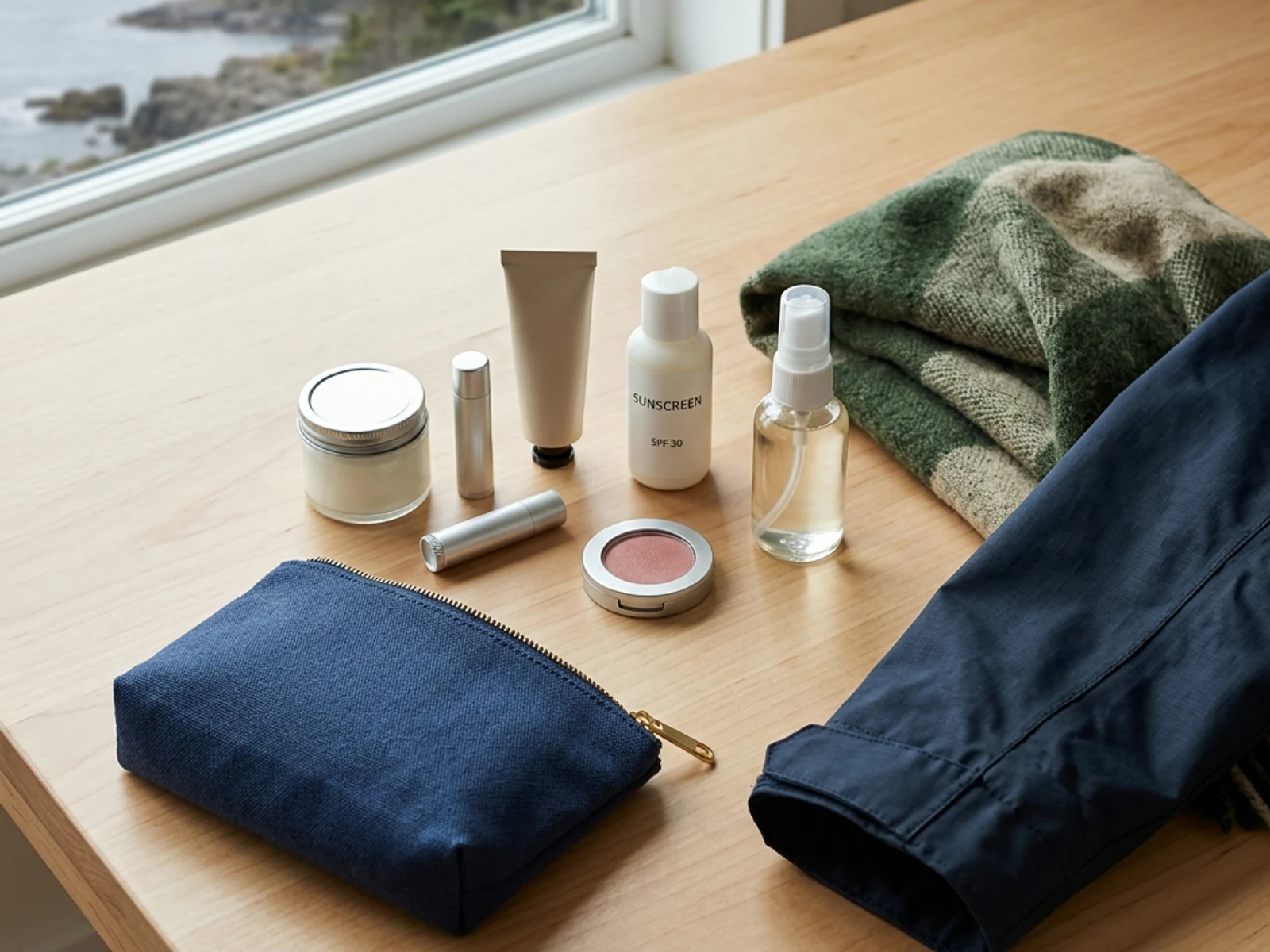
Summer skin planning should stay simple. Sunscreen is a standard personal-care packing category for outdoor plans such as walking, boat tours, beaches and hiking. The guide should not claim a verified NL cool-day UV fact or make disease-prevention promises. A lighter moisturizer may suit warmer central or western Island days, while a familiar base product helps avoid unnecessary experimentation during short trips.
All-season travel benefits from a stable routine: gentle cleanser, familiar moisturizer, lip balm and hand cream. For more detailed winter product planning, the winter skincare guide can carry the national skincare depth.
Nails and cuticles
Nail planning is mostly about activities and trip length. A nail file, hand cream and cuticle oil are optional basics. Winter gloves, luggage handling, hiking, boat tours and long travel days can all make fresh polish or long nail lengths less convenient.
For events or longer stays, a manicure may be worth considering, but it is not a travel requirement. Time it after heavy luggage handling or before an event with enough room for normal set time. Cuticle oil may be more useful in winter or on longer Labrador stays, but the guide should not present it as nail-health treatment.
Brows, lashes and makeup
On windy or wet outdoor days, simple makeup is often more practical than a complex look. Water-resistant mascara and setting spray are optional categories for events, but no product guarantees performance. If eyes water in wind, a lighter eye look may be easier to maintain than heavy liner or layered mascara.
For events, consider purpose and setting first. A makeup appointment before an indoor dinner differs from makeup before hours of outdoor touring. For wedding travel, refer readers to specialist bridal content only if the itinerary supports it; this guide should not repeat a full bridal timeline.
Lash services need provider-led aftercare planning. If you are considering a lash lift, extensions or waxing during a longer stay, schedule around travel, swimming, wind exposure and provider instructions. Do not present any lash or brow service as weather-proof.
Packing checklist
Adjust this checklist by region, season and trip length:
- Familiar moisturizer, richer for winter or Labrador and lighter for warmer Island days
- Non-medicated lip balm
- Sunscreen for outdoor plans
- Anti-frizz product for coastal, damp or wet-condition plans
- Leave-in conditioner for winter static or longer stays
- Gentle cleanser
- Hand cream
- Cuticle oil for winter or long stays
- Nail file
- Water-resistant mascara for wind, rain or events
- Setting spray for events only
- Hair ties and clips
- Travel brush or comb
- Hydrating mask for longer winter or Labrador stays
- Dry shampoo for weekend or one-week convenience
Bring from home or buy after arrival
| Product category | Bring from home when | Buy after arrival when | Notes |
|---|---|---|---|
| Preferred specialty hair, skin and makeup products | You rely on the exact formula or are going to Labrador, rural or remote stops | You are flexible and staying near a larger community | Do not claim exact local availability or scarcity |
| Basic shampoo, body lotion and simple personal-care basics | You need them immediately on arrival | You have time to shop after arrival | Avoid naming retailers or assuming province-wide stock |
| Heavy liquids for seasonal stay or relocation | The specific product matters or travel timing is tight | You can use a common substitute | Do not invent airline, ferry or shipping rules |
| Event makeup, lash products and anti-frizz styling | Exact formula matters for a planned event | You can test a different option without stress | No product guarantees hold, wear or weather resistance |
Optional salon services to research
All services are optional. They are planning choices, not remedies for weather effects.
| Service | Useful scenario | Timing | Planning limit |
|---|---|---|---|
| Haircut | Longer stay, relocation or routine maintenance | Before departure or after arrival | Use haircut services as maintenance, not climate correction |
| Blowout | Indoor event during wet or windy periods | Close to the event | No style is guaranteed to resist dampness or wind |
| Manicure | Event, longer trip or mid-stay refresh | Avoid heavy activity immediately after | No durability guarantee |
| Hydrating facial | Cosmetic skin-service interest | After arrival or before indoor events | A hydrating facial is not a dryness remedy or health service |
| Facials | Comparing service formats | Flexible | Compare facial-service formats without health-suitability claims |
| Scalp treatment | Cosmetic scalp comfort during longer stay | After observing routine changes | No diagnosis or treatment language |
| Makeup application | Event travel | Day of event where practical | No wear-time guarantee |
| Bridal hair or makeup | Wedding travel only | Provider-led timeline | Link to specialist planning later; do not repeat it here |
| Pedicure | Summer event or open-shoe planning | Before or during stay | No claim it protects feet or nails |

Services to schedule carefully
Blowouts before a boat tour, coastal hike or day with expected rain, wind or low visibility may not behave as planned. Time them close to indoor events instead.
Manicures before luggage handling, hiking, outdoor work, long driving days or glove-heavy winter activity may be inconvenient. Lash services, waxing, colour services and smoothing services may have aftercare windows that conflict with swimming, outdoor touring or travel timing. Ask the provider about aftercare and schedule around the itinerary.
Intensive skin services should be provider-led and not based on weather assumptions. This destination guide should not recommend chemical peels or similar services as a climate response.
Routine by trip length
Weekend. Keep the kit compact: moisturizer, lip balm, hand cream, hair ties, clips, a travel brush, nail file and event makeup only if needed. Book a service only for a specific event. A weekend visit does not justify replacing your normal routine.
One week. Add season- and region-dependent items. Coastal spring or summer plans may justify anti-frizz product and smudge-aware makeup. Labrador or winter travel may justify richer moisturizer, cuticle oil and static-aware hair products. Keep salon plans focused on one event or one practical maintenance need.
Two to four weeks. Bring hard-to-replace products, especially for Labrador, rural coastal travel or smaller-community stays. Consider one optional maintenance appointment after arrival once you know your activity rhythm. A haircut, manicure or cosmetic skin-service appointment can be useful if it fits your schedule.
Seasonal stay. Buy bulky basics after arrival where practical and reserve luggage space for specialty products. Watch how your routine performs across changing weather, indoor heating and outdoor plans before making major changes. Build salon maintenance around access, activities and event dates.
Long-term relocation. Use the first few appointments as discovery. Compare salons gradually, ask about ordinary maintenance, and avoid committing to a major unfamiliar service before you understand the season and local options. Browse hair salons by service type when you are ready to compare providers.
Mistakes to avoid
- Treating St. John’s as the whole province.
- Applying Avalon fog or low-visibility language to Labrador.
- Applying Labrador winter assumptions to the Island.
- Treating Labrador as one uniform region.
- Booking elaborate loose hair before exposed coastal touring.
- Treating salt air as a hair-damage cause or skin cure.
- Assuming specialty products will be easy to replace in every community.
- Repeating a national winter routine instead of focusing on destination planning.
Finding salons and services
The provincial salon directory is the main discovery route for comparing salons by location and service type. Use it after narrowing your destination region and trip length. A visitor in St. John’s, a longer-stay traveller in western Newfoundland and a relocating reader in Labrador may need different appointment timing and different product backup plans.
Frequently asked questions
How does the Island of Newfoundland differ from Labrador for beauty packing?
Labrador station examples are substantially colder in winter than St. John’s and many Island examples. For Labrador winter travel, pack richer moisturizer, lip balm, hand cream, cuticle oil and familiar hair products. Island travel still varies by Avalon, central and western or northern areas, but it should not be treated as the same winter-planning problem as Labrador.
Is Newfoundland and Labrador dry or damp for hair and skin planning?
There is no single answer for the whole province. Island station examples record precipitation in every month, and Avalon or eastern examples can support damp or low-visibility planning in spring and early summer. Indoor heating can make winter routines feel drier. Central Island and Labrador examples introduce different temperature patterns, so region and season matter.
Does Avalon fog or low visibility affect makeup and blowouts?
It can affect expectations for Avalon or eastern coastal plans. St. John’s Airport records high hours with visibility below 1 km in spring and early summer, so damp or wet conditions may affect a styled finish. For events, time hair and makeup close to an indoor setting and keep a simpler backup style. Do not apply this wording to Labrador or the entire province.
Will salt air damage my hair?
No approved planning rule supports treating salt air as a hair-changing or skin-improving factor, and it is not a reason to schedule a salon service. Coastal travel can still involve wind, rain and changing conditions, so flexible styling is practical. The planning issue is exposure and activity, not salt-air folklore.
What beauty products should I pack for Labrador in winter?
Bring familiar moisturizer, lip balm, hand cream, cuticle oil, leave-in conditioner or another static-aware hair product, a travel brush and products you would not want to replace under time pressure. Keep makeup simple and choose styles that work under hats or hoods. Treat availability as uncertain rather than guaranteed.
How should I manage hair on a coastal boat tour?
Use a contained style such as a braid, low bun or clip-secured shape. Bring a travel brush or comb and avoid relying on a fresh loose blowout for several hours outdoors. Wind and wet conditions may affect styling, but this does not mean coastal air damages hair.
How should I time salon services for a two-to-four-week stay?
Wait until after arrival when possible. Observe your destination, activities and product needs before booking. A mid-stay haircut, manicure or optional cosmetic service may be practical if it fits the itinerary. Avoid booking services immediately before hiking, boat tours, heavy luggage handling or travel days.
Is sunscreen useful on cool coastal summer days?
Sunscreen is a standard personal-care item for outdoor plans such as walking, hiking, boat tours and beach days. This guide uses sunscreen as practical packing guidance, not as a province-specific climate claim or medical promise.
Final summary
Plan Newfoundland and Labrador beauty travel by region, season and trip length. Keep the Island and Labrador separate in your thinking, treat St. John’s as one useful example rather than the whole province, and use coastal wording only where it fits. Pack familiar essentials, time optional services around activities, and let longer stays guide gradual routine changes.
Ready to compare salons?
Move from guide reading into local discovery with service pages, city pages, and featured salon profiles.